
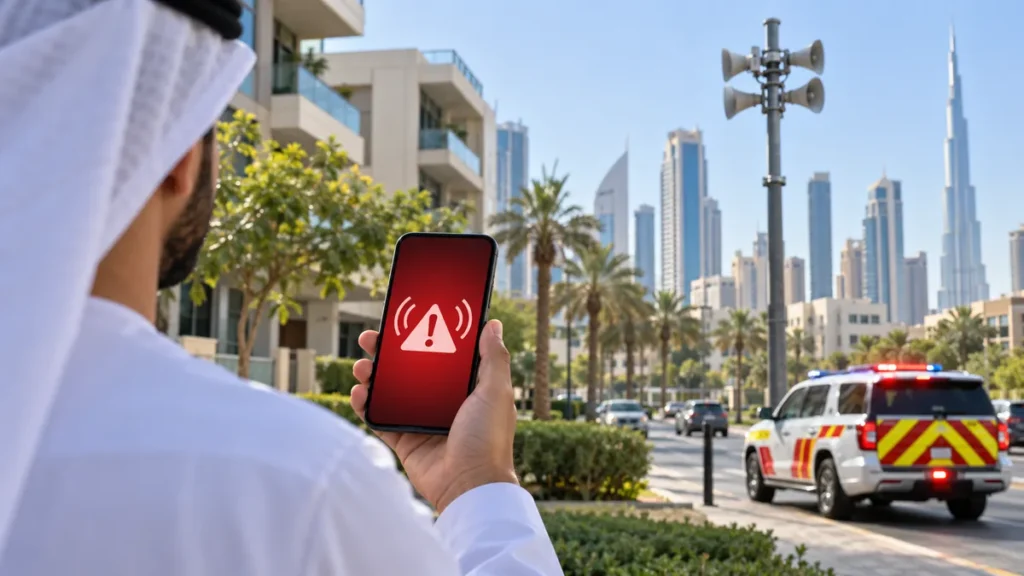
An unexpected emergency alert on a phone or a public siren can cause confusion when residents do not know what it means. The safest response is not to guess: stop, read or listen carefully, follow the named authority’s instructions and use official updates instead of forwarding an unverified message.
The National Emergency Crisis and Disaster Management Authority’s official emergency guide describes a public-warning system of sirens placed in strategic areas. It distinguishes a warning signal, an all-clear signal and an important-announcement signal. Actual instructions may depend on the incident, so the current message always takes priority over a general summary.
Know the three basic signal purposes
NCEMA’s guide explains that a warning signal indicates danger and calls for movement to a shelter or previously selected safe area. An “out of danger” signal indicates that the threat has abated. An important-announcement signal directs people to listen to local radio or another available official source. Do not leave a safe place merely because the siren stops; wait for a verified all-clear.
The UAE emergency numbers guide explains which number fits police, ambulance or fire emergencies. During severe weather, the Dubai transport-safety guide helps residents understand official colour warnings.
| Alert type | Immediate response | Avoid |
|---|---|---|
| Phone alert | Read the full sender and instruction | Closing it before noting the action |
| Warning siren | Move to the instructed safe place | Going outside to investigate |
| Important announcement | Use official broadcast or authority channel | Relying on forwarded voice notes |
| All-clear | Resume only as directed | Assuming silence means safety |
| Local incident | Keep access routes clear | Driving toward the scene |
What to do when a phone alert arrives
Pause safely if driving; a passenger should read the message, or the driver should stop in a legal place. Note the issuing authority, affected area, time and required action. Charge the phone, reduce non-essential use and tell household members through a short verified message. Screenshots can be useful, but do not post personal data or location details that create risk.
The Dubai mobility-safety guide helps prepare water, lights, medicine and documents. The Dubai incident-reporting guide covers safe appliance and lighting choices.
Emergency response checklist
- Read or listen to the entire official instruction.
- Move away from windows, roads or low areas if directed.
- Bring children, older relatives and People of Determination with you.
- Use stairs rather than lifts when authorities or building safety rules require it.
- Keep emergency routes clear for police, ambulance and civil defence.
- Use official authority channels for updates and the all-clear.
- Call emergency services only for genuine urgent need.
Prepare household roles in advance
Choose who collects medicine, who assists a child or older person and where the family reunites if separated. Keep shoes, keys, a small light and essential medication accessible. A written contact card helps children or visitors who do not remember local numbers.
The Dubai practical-services guide explains meeting points and out-of-area contacts. Pet owners should include carriers, water and identification rather than delaying evacuation to search for equipment.
Respond differently to different hazards
There is no single correct movement for every emergency. Flooding may require avoiding wadis and underground areas; fire may require leaving a building by stairs; an external hazard may require staying indoors and closing windows. Follow the incident-specific instruction, building alarm and emergency personnel.
Drivers should never block a hard shoulder, emergency access or flooded underpass. The Dubai traffic-diversion guide explains how to plan around official closures.
Verify before sharing
Check the source, timestamp and location. Old warning screenshots often return during a new weather event. Share a direct link from NCEMA, police, civil defence, the National Center of Meteorology or the relevant local authority rather than a cropped image with no date.
If a rumour creates immediate public-safety concern, report it through the authority’s official channel instead of arguing publicly. Keep messages short so important instructions remain visible in family and community groups.
After the all-clear
Return cautiously. Look for damaged wiring, standing water, smoke, unstable objects or official cordons. Photograph property damage only when safe, keep receipts for necessary expenses and do not enter a restricted area. Review which supplies, contacts or accessibility arrangements failed and update the household plan.
Public warnings work best when people respond calmly and predictably: receive the instruction, verify the authority, take the stated action and wait for the official all-clear.
Questions people often ask
What should I do when an emergency alert appears on my phone?
Read the full message, identify the issuing authority and follow the location-specific instruction. Do not forward it without the source and time.
What does a UAE public warning siren mean?
NCEMA describes warning, important-announcement and all-clear signals. Listen for official instructions because the required action depends on the incident.
Should I call 999 to ask what an alert means?
No. Keep emergency lines for urgent help. Use official authority channels and broadcasts for general information unless someone is in immediate danger.
Does silence after a siren mean the danger is over?
Not necessarily. Remain in the safe location until an official all-clear or further instruction is issued.
Which sources should I trust during a UAE emergency?
Use NCEMA, police, civil defence, the National Center of Meteorology and the relevant government authority’s verified channels.


