
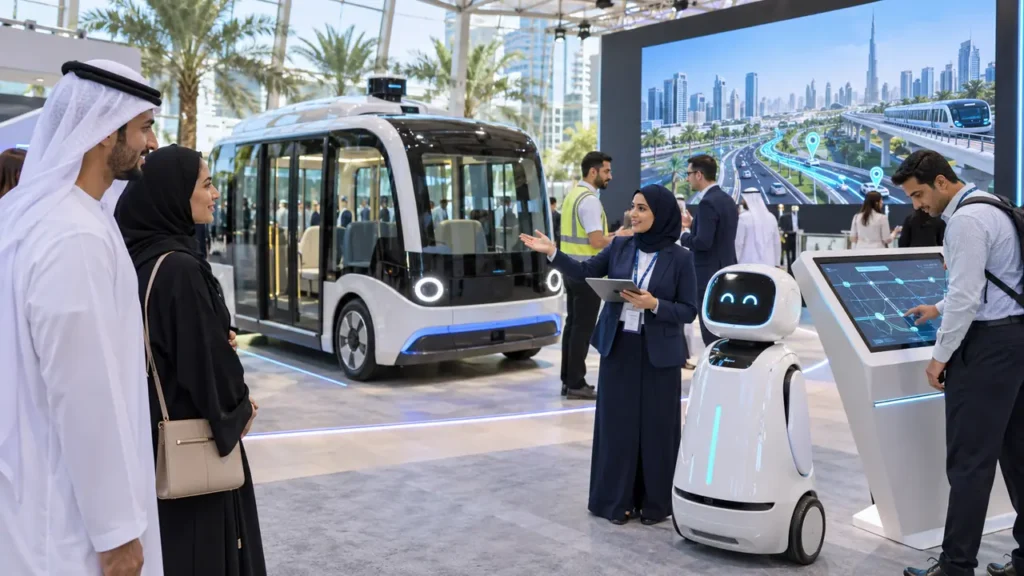
Dubai’s Roads and Transport Authority is running an “Artificial Intelligence in Mobility” programme from 23 to 25 November 2026 as part of UAE Innovation Month. It includes demonstrations, workshops, knowledge sessions and innovation challenges around autonomous vehicles, robotics, electric mobility, virtual reality and transport research.
The official RTA announcement describes an exhibition at RTA headquarters and capability-building activities. It does not say that every prototype is available for public travel, that existing fares or rules have changed, or that all programme sessions are open without registration. Travellers should separate a demonstration from an operational service.
Announcement versus passenger reality
| Programme area | What is being explored | What passengers should assume |
|---|---|---|
| Autonomous vehicles | Future mobility demonstrations | Not a public route unless RTA announces one |
| Robotics | Potential service and operational uses | Existing staff instructions still apply |
| Artificial intelligence | Planning and customer-service applications | Check official outputs and protect personal data |
| Electric mobility | Cleaner transport technology | Normal access and safety rules remain |
| Innovation challenges | Ideas for better mobility | No immediate network change is guaranteed |
How to read a mobility demonstration
Ask what stage the technology has reached: concept, controlled trial, limited pilot or fully available service. A vehicle displayed indoors may not yet be authorised to carry passengers on public roads. A route-planning tool may provide advice without replacing official signs, staff direction or a confirmed timetable. The responsible-sharing guide helps readers avoid turning a prototype into a false launch announcement.
When a new service becomes operational, RTA normally publishes route, eligibility, booking, fare and safety information. Until then, plan journeys through existing channels. The Dubai public-bus and nol guide explains why current baggage and payment rules matter more than an exhibition concept.
Questions to ask about future transport
- Is this a concept, pilot or public service?
- Who may use it and where does it operate?
- What fare, booking and identification rules apply?
- How are accessibility and emergency assistance handled?
- What passenger data is collected and why?
- Who is responsible when the system makes an error?
- Where are official service changes published?
Accessibility should be designed into a system rather than added later. Look for step-free boarding, audio and visual information, human assistance, emergency communication and space for mobility devices. Families can use the route-checking method in the accessible visitor planning guide while waiting for service-specific Dubai details.
Protect data and keep a fallback
AI-assisted mobility can use location, payment, account and journey information. Use only official apps and websites, review permissions and avoid entering identity or payment data into an unverified demonstration link. The UAE data-breach guide explains why access, retention and reporting questions matter even when a tool is convenient.
For an important journey, keep a fallback. Save the address, allow transfer time and know an alternative route if a pilot is unavailable. The Metro luggage guide and flight-status guide show how current operational rules should anchor a real trip.
Drivers should also remember that smart infrastructure does not remove personal responsibility. Maintain lane discipline and following distance; the safe-following-distance guide remains relevant regardless of how much technology supports the network.
Questions people often ask
When is RTA’s AI in Mobility programme?
The announced dates are 23 to 25 November 2026.
Does the announcement launch a new autonomous passenger route?
No. It describes exhibitions and innovation activities, not a new public route with fares and booking rules.
Where is the main exhibition described?
The announcement identifies RTA headquarters as the location of the “Towards the Future” exhibition.
Can passengers rely on a prototype for an important trip?
No. Use current operational RTA services unless an official notice confirms a pilot is available to you.
What should travellers check before using a new mobility tool?
Verify the official provider, service status, route, fare, access rules, data permissions and backup option.


