
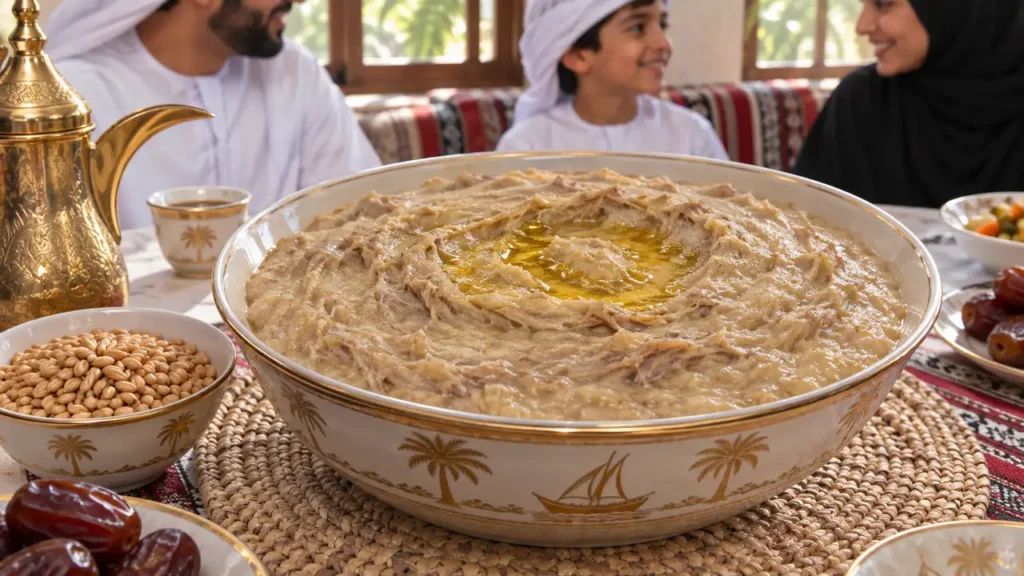
A large dish of harees can bring a group together around the table. The savoury dish is made with wheat and meat and commonly finished with ghee. It can appear at family gatherings, national occasions and during Ramadan. UNESCO recognised the knowledge, skills and practices associated with making and sharing the dish in the UAE, Oman and Saudi Arabia.
| Part of the tradition | What to notice |
|---|---|
| Wheat | It gives the dish its soft, thick body. |
| Meat | Ask the cook or host which meat is used. |
| Ghee | Amounts and presentation can vary by household. |
| Sharing | The dish can be served in a large vessel for a group. |
Notice the texture and the work behind it
The soft, thick consistency comes from cooking the wheat and meat together and working them into a cohesive dish. Ask the person serving it how they learned to make it or what their family prefers. While our Emirati food primer introduces several dishes, harees is a chance to spend time with one preparation and understand why it matters at a gathering. For a different way food traditions are presented, see the We Are Oman exhibition guide.
Ask what is in the serving in front of you
Someone new to the dish can start with a small portion and find out the meat and finishing ingredients. The wheat is relevant for people avoiding gluten, and the ghee or other additions are worth asking about if you have dietary requirements. Our allergy-aware dining guide gives examples of questions to ask. If you will carry food to a shared celebration, our celebration food-safety guide covers handling and serving.
Treat sharing as part of the experience
The UNESCO decision describes skills and practices that communities preserve. The dish belongs in a social setting as much as in a kitchen. Follow the host’s lead on portioning and serving. For ideas on experiencing the wider occasion, see our Dubai National Month etiquette guide and Eid Al Etihad family guide.
- Ask the host what meat and finishing ingredients were used.
- Try a small serving before going back for more.
- Ask how the cook learned the preparation.
- Check dietary needs separately before sharing.
See the UNESCO inscription decision about harees and the UAE Government’s introduction to Emirati food culture.
Questions people often ask
What is harees made of?
The documented tradition uses wheat and meat, with ghee commonly added. Ask about the ingredients in the version you are served.
What does UNESCO recognise?
The inscription recognises the know-how, skills and practices associated with preparing and sharing harees.
Which countries submitted the nomination?
The UAE, Oman and Saudi Arabia jointly nominated the tradition.
When might harees be served in the UAE?
Local communities serve it for social and national occasions and during Ramadan, among other gatherings.
Is regular harees suitable for a gluten-free diet?
Traditional harees uses wheat, a source of gluten. Check the ingredients and preparation when a special diet is involved.


