
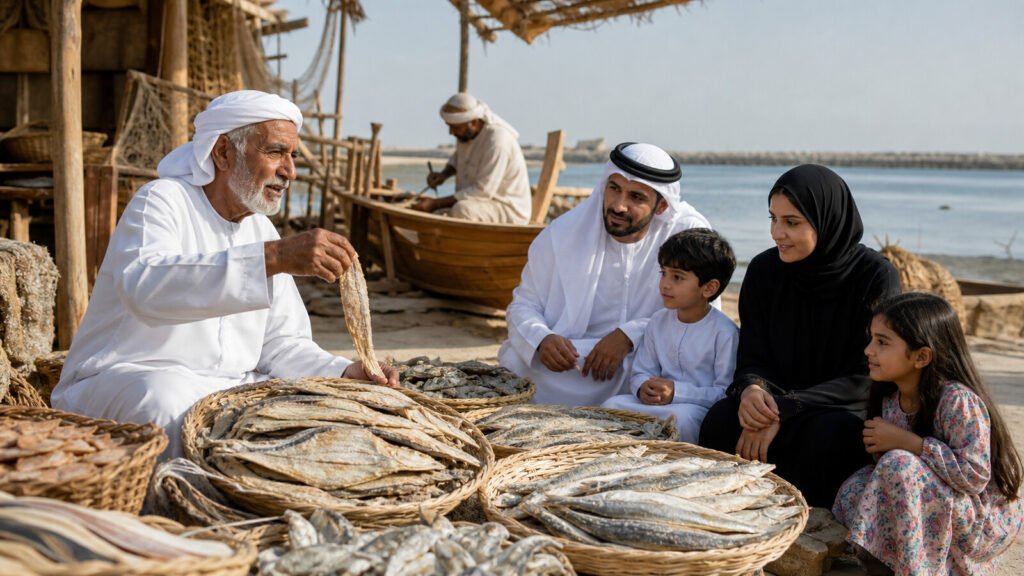
Al Maleh is not the sort of food people understand from a quick taste alone. Salted fish belongs to the coastal history of the UAE, when preserving a catch helped families keep food for longer and carry it beyond the day it was landed. A four day festival in Dibba Al Hisn is bringing that craft together with fishing, boatbuilding and Emirati cooking.
The 13th Al Maleh and Fishing Festival runs from 27 to 30 August 2026 on Al Hisn Island. It opens daily from 9 in the morning until 9 at night, giving visitors enough time to see the market, workshops and demonstrations without rushing through the food stalls.
What visitors will find
The Main Maleh Market is the centre of the event, with producers selling different salted fish products. More than 50 productive families and home businesses are taking part across the festival, alongside local companies, government bodies and organisations connected to maritime heritage.
A traditional food area will serve Emirati dishes. Local agricultural produce will also appear in dedicated pavilions, so the visit is broader than a single preserved food. The official festival preview says 20 government and private organisations are involved, along with companies working in Al Maleh production and distribution.
Fishing equipment, marine engines and boat supply businesses will have a presence too. That mix makes the festival useful for families who want a heritage outing and for people who work in fishing or small food production.
Why Al Maleh tastes different
Salt draws moisture from fish and changes both texture and flavour. The result is firmer and much more concentrated than fresh grilled fish. It is normally eaten as part of a meal rather than treated as a large portion on its own.
Preparation traditions differ between families and producers. The type of fish, amount of salt, cutting method and preservation time all affect the finished product. That is one reason the market is worth exploring slowly. Ask sellers how their product is prepared and how they recommend cooking or serving it.
If this is your first time buying Al Maleh, start with a modest quantity. Check how it should be stored before and after opening. A sealed product still needs to be handled according to the maker’s directions, especially once it reaches a warm car or kitchen.
Workshops explain the craft
Daily workshops will cover fish salting, preservation and canning. These sessions can show the difference between a finished product and the careful process behind it. The programme also includes awareness sessions on conserving fish stocks and using sustainable fishing practices.
Visitors can watch traditional fishing nets being made and see boatbuilding demonstrations. These skills put the food in context. Al Maleh begins with knowledge of the sea, the season and the catch, then continues through cleaning, salting, drying and storage.
Families with children can look for heritage competitions and activities in the daily programme. The Sharjah Chamber announcement describes the event as both a cultural and economic programme for the Eastern Region, not simply a food market.
How to plan the visit
Al Hisn Island is in Dibba Al Hisn on the east coast, so visitors coming from Dubai or Abu Dhabi should allow for a proper road trip. Check the route and live traffic before leaving, and avoid planning another fixed appointment immediately after the festival.
The published hours are 9 in the morning to 9 at night each day. The organisers have not published a detailed hour by hour schedule in the official notices reviewed for this guide. If one workshop or demonstration matters to you, check the organiser’s current channels before starting the journey.
Wear comfortable shoes and bring a reusable water bottle if permitted. Carry a cool bag if you intend to buy food that requires controlled storage, and ask the seller how soon the product should be refrigerated.
Buying from small producers thoughtfully
More than 50 productive families and home businesses will be displaying handmade goods and food. Take a moment to ask who made an item and what is included. Clear questions help small sellers explain the value of a product that may not come in familiar retail packaging.
For Al Maleh, look for a clean sealed container and storage guidance. Ask what type of fish was used, whether the product needs soaking before cooking and how many servings the package is intended to provide. Do not assume every salted fish product is prepared in the same way.
The most interesting part of the festival is the link between food and place. Visitors can taste a preserved ingredient, watch the tools connected to fishing and meet families keeping those skills in use. That makes the visit more meaningful than simply buying a jar and leaving.
Questions people often ask
When is the Al Maleh and Fishing Festival?
It runs from Thursday 27 August through Sunday 30 August 2026.
Where is the festival held?
The venue is Al Hisn Island in Dibba Al Hisn, in Sharjah’s Eastern Region.
What are the daily opening hours?
The official preview says the festival is open from 9 in the morning until 9 at night each day.
What can visitors do besides buy salted fish?
They can attend preservation workshops, see fishing net and boatbuilding demonstrations, explore traditional food and agricultural stalls, and join family heritage activities.
Has an admission price been announced?
The official notices reviewed for this guide do not state an admission price. Visitors should check the organiser’s latest update before travelling.


