
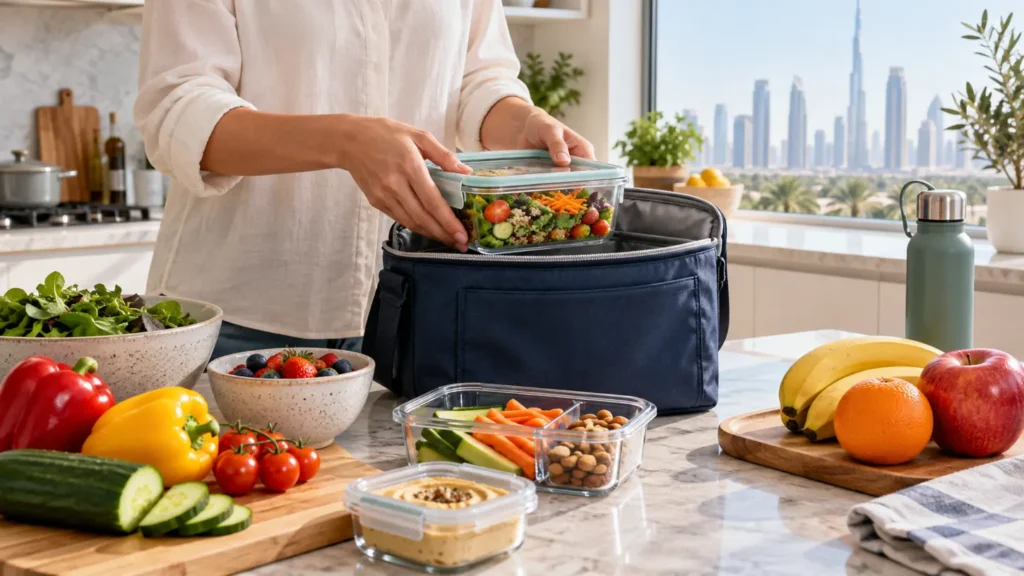
A packed lunch can save time on a school, office or travel day, but it needs the same food-safety thinking as any meal prepared at home. The key question is not whether a dish looked fine when it left the kitchen; it is whether it will stay at a safe temperature until it is eaten. Start with clean hands, clean containers and food that has been stored correctly before packing.
Choose a menu that suits the journey. Whole fruit, dry snacks and shelf-stable items are easier to manage than foods that must stay cold. If you are packing cooked food, dairy, cut fruit, eggs or a prepared salad, use an insulated bag and cold packs where appropriate, and make sure there will be access to refrigeration. Our Dubai food-label guide can help with package storage instructions, while our cooked rice and leftovers guide explains why prompt cooling is important after cooking.
Prepare, cool and pack in the right order
Do not seal steaming food inside a bag and hope it will cool on the way. Let cooked food cool safely before refrigerating it, then pack it from the fridge shortly before departure. Keep raw ingredients away from ready-to-eat items, and use containers that close securely. A lunch bag sitting in a hot car, a sunny classroom or an office drawer is not a substitute for a refrigerator.
| Lunch item | Practical approach |
|---|---|
| Whole fruit or dry snack | Keep clean and protected from damage |
| Chilled prepared food | Use an insulated bag and cold source |
| Cooked leftovers | Cool and refrigerate promptly before packing |
| Raw food | Keep separate from ready-to-eat food |
Make eating time safer too
Encourage children to wash hands before eating, or pack a practical hand-cleaning option when a sink is not available. Teach them not to share food where an allergy is involved, and make the contents easy for the person eating it to identify. For a household managing allergens, our food-allergy guide is a separate useful read; the label, recipe and medical advice should always guide individual decisions.
Food that returns home untouched should be assessed, not automatically placed back in the fridge for tomorrow. If you cannot be confident about how long it was warm, discard it. That is particularly important after a long commute, a sports day or an outdoor stop. The same habit helps with grocery deliveries: our food delivery storage guide sets out why chilled items should be dealt with first after they arrive.
Packed-lunch checklist
- Wash hands and use clean, dry containers.
- Choose food that matches the available storage.
- Cool cooked items and refrigerate them before packing.
- Use an insulated bag for foods that need to stay cold.
- Discard food if its temperature history is uncertain.
For official local food-safety resources, start with Dubai Municipality. Follow the food label and any specific medical or school guidance as well.
Plan around the real day, not an ideal lunch break
A lunch can be safe at 8am and unsuitable by early afternoon if it has spent hours without refrigeration. Keep the plan modest: pack the amount that will actually be eaten, use separate containers for wet and dry items, and ask whether a refrigerator is available before choosing a chilled menu. For school-day routines, our UAE school-run safety guide can help make the morning less rushed, while our Dubai food-recall guide explains what to do if a product you planned to use is subject to an official notice.
Questions people often ask
Should hot cooked food go straight into a lunch bag?
No. Cool and refrigerate it safely first, then pack it from the fridge shortly before leaving.
Do chilled lunches need an insulated bag?
Yes, where food needs to remain cold during the journey. Plan for cold packs and refrigeration at the destination where possible.
Can I pack leftovers for the next day?
Only if they were cooled and refrigerated promptly and can be kept appropriately cold until eaten.
What foods are easiest for an unrefrigerated lunch?
Whole fruit and shelf-stable items are generally simpler; follow labels and choose foods that suit the actual storage available.
What should I do with uneaten food that returns home?
Do not automatically save it. If you cannot be confident it was kept at a suitable temperature, discard it.


