
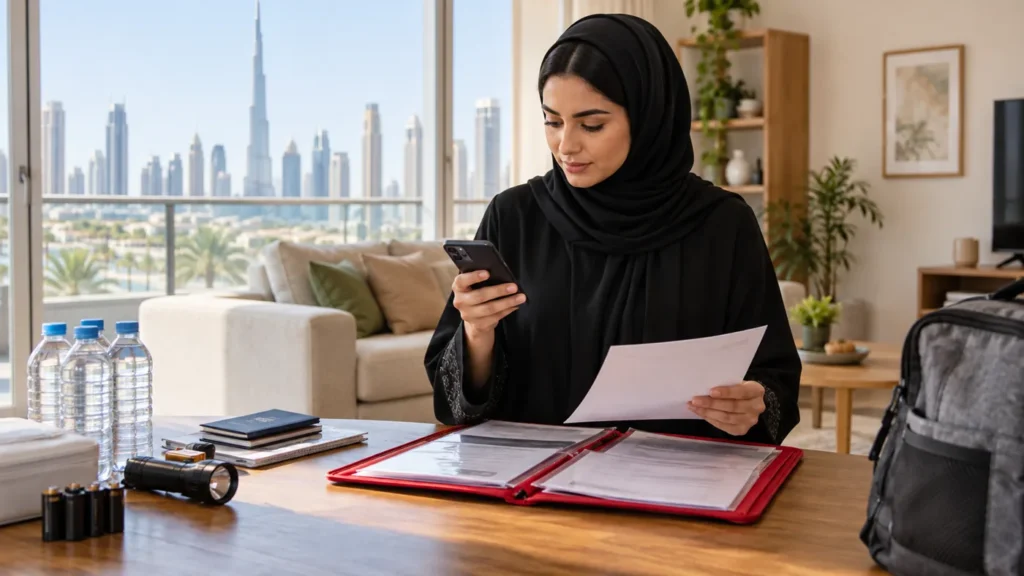
A household emergency file is a small, organised collection of information that helps a family act when a phone is lost, a relative needs urgent care, travel documents cannot be found or the home must be left quickly. It is not a box containing every private record. The aim is to make essential facts available to the right people without creating a new identity-theft risk.
Emergency services should always be contacted through current official channels. Use the Dubai Police official website for verified police services and public-safety information, and save relevant emergency numbers directly from authoritative sources. Do not rely on a forwarded image that may be outdated or may confuse emergency and non-emergency services.
Choose a controlled format
Create one physical folder in a known, secure place and one encrypted digital backup. The physical copy is useful during a power, device or account problem; the digital copy helps if the folder cannot be reached. Do not put original passports, large amounts of cash and every password in an easy-to-carry folder. The file should support action while limiting harm if it is lost.
Tell responsible adults where the file is and who may use it. Children old enough to understand should know how to contact a parent or emergency service, but they do not need access to financial credentials. Review the plan with any caregiver who may be alone with a child, older relative or person who needs assistance.
Build the contact and document sections
Start with a one-page contact sheet: household names, mobile numbers, a trusted relative, building management, school or nursery contacts, and the preferred hospital or medical contact where appropriate. Add each person’s allergies, important conditions and medicine list if they consent. Keep it concise enough that someone can read it under pressure.
Include copies—not necessarily originals—of key identity and insurance details where lawful and useful. Record where originals are kept. Travellers can use the UAE road-trip documents guide and Dubai Airport family guide to build a separate trip-specific pack rather than carrying the full household file.
| Section | Useful contents | Security control |
|---|---|---|
| Contacts | Family, emergency, school and building numbers | Review numbers regularly |
| Health | Allergies, medicines and relevant care notes | Share only with responsible people |
| Documents | Selected copies and location of originals | Keep the folder secured |
| Home | Utility shut-off and meeting-point notes | Do not include unnecessary access codes |
| Digital backup | Encrypted copy of essential pages | Use strong access protection and test recovery |
What to place on the review checklist
- Confirm that all contact numbers still work.
- Update medicines, allergies and insurance details.
- Replace expired copies or changed identification information.
- Test that the encrypted backup can be opened by an authorised adult.
- Practise the household meeting point and one alternative.
Plan for common disruptions
A lost phone can remove access to contacts, banking authentication and cloud records at the same time. Keep key numbers somewhere other than the device and follow the Dubai lost-phone response guide to protect the SIM and financial accounts. The deepfake scam safety guide can help families agree on a verification phrase or callback method for alarming messages.
Vehicle trouble is another reason to keep a small information card separate from the home file. The Dubai car-safety guide covers roadside readiness, while the minor-accident reporting guide explains why drivers should use official reporting routes rather than improvising after a collision.
At home, write a simple evacuation note: two exits where available, an outdoor meeting point and who assists a child, older person or pet. Never re-enter a dangerous area to collect the folder. Personal safety comes first; the file is replaceable. Keep pathways clear and follow building instructions, alarms and emergency-service directions.
Review the file every six months and after a move, new passport, school change, new medicine or changed phone number. Shred obsolete paper securely and remove old digital copies. A short, current file is more useful than a thick archive nobody can understand.
Questions people often ask
Should original passports be stored in the emergency file?
Not automatically. Keep selected copies and note where originals are secured; avoid creating one portable package containing every valuable document.
Who should know where the file is?
Responsible household adults and relevant caregivers should know. Access should be limited according to the sensitivity of the information.
Is a cloud folder enough?
No single format is perfect. Keep a secured physical copy and an encrypted digital backup so one device or account failure does not remove all access.
How often should the file be reviewed?
Review it at least every six months and whenever contact, identity, school, insurance or medical details change.
Should passwords and bank PINs be included?
No. Do not place raw passwords, PINs or unnecessary financial credentials in the file. Use a secure password-management and recovery plan instead.


