
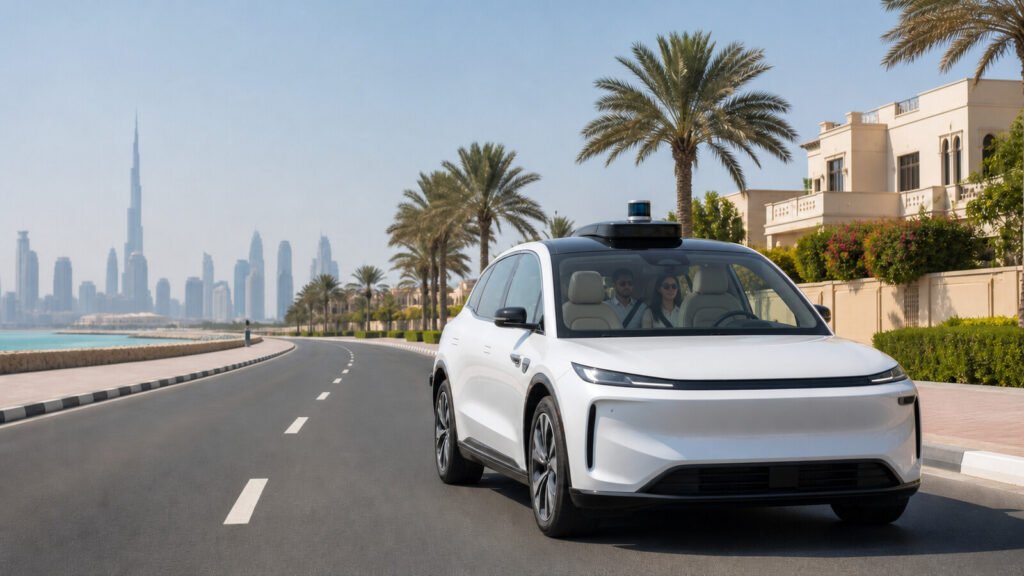
Dubai’s driverless taxi service has moved beyond a small demonstration. Robotaxis have now travelled more than four million kilometres and completed 7,613 passenger journeys, according to the Roads and Transport Authority. For riders, the useful news is that fully driverless vehicles can be requested in selected parts of Jumeirah and Umm Suqeim.
The service is still being introduced in stages, so it does not behave like a normal taxi option across the whole city. Knowing the current areas, booking routes and operating limits will make it easier to decide whether it fits a particular journey.
Where riders can currently use the service
The commercial launch covered Jumeirah and Umm Suqeim, including busy neighbourhoods near the public beaches. The latest RTA update says riders in selected areas can access fully driverless Robotaxis as the network expands.
A trip needs to fall within the service area shown in the booking application. A pickup that appears close on a map may still sit outside the active zone, and availability can vary with vehicle position and operating conditions. Check the application before relying on the service for a time sensitive journey.
Dubai is working with three autonomous mobility companies. They are Baidu’s Apollo Go, WeRide and Pony.ai. The public booking routes most clearly identified by RTA are Uber for vehicles supported by WeRide and Apollo Go’s own application for its vehicles.
How to request a Robotaxi
For the Uber route, open the application and enter a pickup and destination within the supported area. Look for the Autonomous service option when it is offered. The original public pilot used this selection, and RTA later confirmed that WeRide commercial vehicles were available through Uber.
For Baidu vehicles, use the Apollo Go application and check whether your intended points are accepted. RTA’s commercial launch notice names both Uber and Apollo Go as booking channels in Jumeirah and Umm Suqeim.
Read the vehicle details before walking to the pickup point. Confirm the registration, location and instructions inside the application, just as you would for any booked car. Do not approach a different autonomous vehicle simply because it is nearby.
What the latest numbers actually show
RTA reported a fleet of 144 Robotaxis, with 48 in active operation and roughly 50 trips being completed each day. Customer satisfaction reached 97 percent. These figures show meaningful operating experience, but they do not mean 144 cars are available to book at every moment.
The four million kilometre figure includes the distance used to test and validate performance under real road conditions. That testing is part of a phased safety process, using defined operating zones before broader access is introduced. The 7,613 passenger trips are a separate measure of customer journeys.
These distinctions matter because autonomous fleets learn through repeated exposure to traffic patterns, junctions and road behaviour. A large testing distance helps operators refine the system, while passenger trips show how it performs as a real service.
What a first ride may feel like
The most unusual moment is often the absence of a driver. Give yourself time to follow the access and safety instructions displayed in the vehicle or application. Fasten your seat belt, keep children properly secured and do not interfere with sensors or equipment.
The car may drive more cautiously than an experienced human driver in situations such as merging traffic or a crowded pickup area. That does not necessarily indicate a problem. The service is designed to operate within defined safety rules and can respond conservatively when conditions are uncertain.
If the vehicle cannot continue or you feel uncomfortable, use the support method provided in the car or booking application. Avoid trying to direct the vehicle with gestures or by touching controls that are not intended for passengers.
When a normal taxi may still be easier
A standard taxi remains the practical choice when either end of the journey is outside the active zone, when a specific vehicle type is required or when a tight connection leaves little room for availability changes. Travellers heading to an airport should build in extra time and choose the most reliable option shown at that moment.
Passengers with accessibility needs, large luggage, child seat requirements or several companions should check the vehicle description before booking. Autonomous does not automatically mean that every vehicle can handle every passenger need.
The service is expected to expand as RTA and its partners validate more operations. Dubai’s wider goal is for 25 percent of transport trips to be autonomous by 2030. That target covers a broader transport strategy, not only the current Robotaxi fleet.
Questions people often ask
Where do driverless taxis operate in Dubai?
RTA has identified selected areas of Jumeirah and Umm Suqeim as the current commercial service zone. The booking application shows whether a particular trip is supported.
Which applications can riders use?
RTA says WeRide vehicles are available through Uber and Baidu vehicles through the Apollo Go application in the active areas.
Are the vehicles fully driverless?
Yes, fully driverless services are operating in selected areas. Earlier pilot rides used a specialist driver, so riders should check the service description for the vehicle they book.
How many Robotaxis are operating?
The latest update reported 144 vehicles in the fleet, including 48 in active operation, with about 50 trips completed daily.
Can a Robotaxi take me anywhere in Dubai?
Not yet. The service works within defined zones, and a request will depend on whether both journey points and a vehicle are available.


