
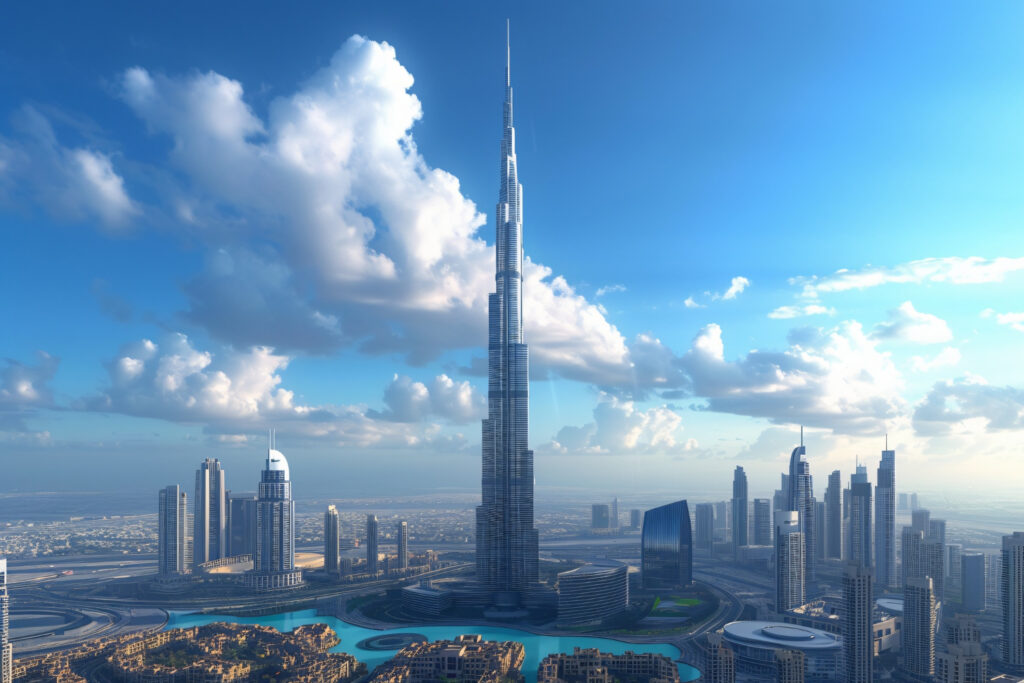
It is a well-known fact that the skyline of Dubai is truly jaw-dropping with its towers soaring high into the clouds. But none of them can be compared to an amazing Burj Khalifa. It is an amazing 829 metres and 163 stores high, and remains the tallest building in the world, however, there is a twist to it during Ramadan.
One interesting fact has been observed each year since the first opening in 2010 by the tower, and it is that people living in Burj Khalifa in varying levels do not break the fast at exactly the same time.
Here’s how it works.
Also look What Is Business Valuation in Dubai? Meaning, Methods & Importance
Why Fasting Times Differ Inside the Tower
Fajr (dawn): Muslims break the fast during Ramadan in the morning. Maghrib (sunset): Muslims Fast in the evening. The sun sets below the horizon and then the fast is broken.
Since the Earth is curvy, individuals in higher places are in a position to have a slightly longer view of the sun than any person on the ground. When a building is this high, the difference is so significant that it can be felt to influence official fasting times.
It implies that people who occupy Burj Khalifa can start their fast and end it at different hours depending on the floor they occupy.
The Three Various Iftar Times
During Ramadan, we have three distinct times of residents and visitors within the tower:
- Until the 80th floor: Inhabitants are adhering to the regular Dubai Maghrib and Fajr schedules.
- 80th to 150th floors: Iftar is eaten two minutes after maghrib call to prayer. Fajr is also two minutes before the commencement of fasting.
- Past 150th floor: Iftar three minutes after Maghrib, fasting starts three minutes before daybreak.
The logic is easy to figure out; the higher you are the later you watch the sunset and the earlier the sunrise.
This will not only be applicable to those living therein but also to customers who visit the Atmosphere restaurant located on the 122nd floor, as well as the visitors of the At The Top observation decks.
It’s not just the Burj Khalifa
Burj Khalifa is the 80th floor which is approximately 300 metres high. Due to this, adjustments of a similar timing might be necessary in higher floors of other excessively tall constructions in Dubai.
Other skyscrapers like Princess Tower, 23 Marina, Ciel Dubai Marina, Elite Residence, Kempinski The Boulevard, Almas Tower, Il Primo and the JW Marriott Marquis also elevate to very great heights where the difference of a few seconds or even one minute can take place.
But the adjustment is not so well defined anywhere as in the Burj Khalifa.
What About When You’re Flying?
The times of fasting are even more influenced by the altitude in the case of travelling by air.
Some airlines like Emirates employ specialised software to calculate the correct fasting and iftar time on the flight. The data used to calculate is the longitude, latitude and altitude of the aircraft on the move.
Depending on the exact place of the aircraft during the time of sunset, passengers are instructed by the captain when it is time to officially end the fast.
A Unique Ramadan Experience
There is no better place to experience Ramadan in Burj Khalifa. The view of the sun setting in the sky hundreds of metres away is breathtaking to see, and it is worth the additional two or three minutes before you can take the first gulp of the water.
The same principle will be used in the further years, such as the Burj Khalifa 2026, provided that the tower is the tallest one in the surrounding.
Therefore, do individuals in the Burj Khalifa fast more?
Yes and no, by a few minutes. It is a little but interesting consolation that even the sunset in Dubai is relative to the height at which you live.


