
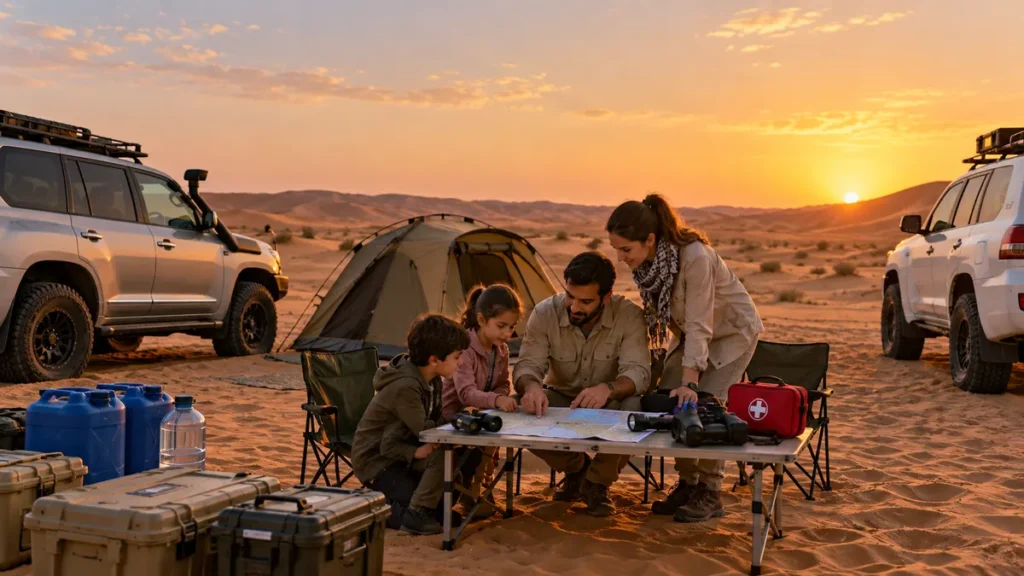
Dubai’s cooler season makes desert camping attractive, but a safe overnight trip requires more than a tent and a location pin. The route may include soft sand, mobile coverage may be weak and a calm wadi can become dangerous after rain elsewhere. The planning standard should rise as the campsite moves farther from a paved road.
The official Visit Dubai camping guide advises campers to travel with more than one vehicle, tell someone the route and return time, carry extra food and water, avoid private land and never camp beside a ravine that could flood. Site signs and government instructions always override a general guide.
Match the campsite to the driver
A first-time camper does not need to drive deep into dunes. Choose a legal, accessible location near a safe exit and arrive in daylight. Off-road dune driving requires a suitable four-wheel-drive vehicle, recovery equipment and skill; an ordinary crossover and enthusiasm are not substitutes.
Use the Dubai car safety checklist before departure and the UAE road-trip guide for documents, fuel and rest planning. Never reduce tyre pressure or attempt recovery without understanding the vehicle and route.
| Risk | Preventive check | Stop condition |
|---|---|---|
| Vehicle stuck | Two capable vehicles and recovery plan | No trained driver or safe anchor |
| Heat or dehydration | Extra water and shade | Illness, confusion or inadequate supply |
| Flash flooding | Forecast and high-ground camp | Rain warning or water near a wadi |
| Weak signal | Shared route and offline map | No communication fallback |
| Fire | Allowed equipment and extinguisher | Strong wind or prohibited location |
Check weather beyond the campsite
Look at wind, temperature, visibility and rain across the wider catchment area. Rain can create runoff even when the campsite is dry. Strong wind can make tents, cooking flames and loose equipment unsafe. If conditions deteriorate, leave while the route is still visible and passable.
The UAE weather-aware trip guide explains how forecasts can differ across a route. Save official warnings and do not enter a closed track.
Camping equipment checklist
- Extra drinking water, food and essential medication.
- First-aid kit, torch, charged phones and power banks.
- Offline map, shared route and agreed check-in time.
- Suitable tent, warm layer, sunscreen and closed footwear.
- Vehicle tools, recovery gear and tyre equipment used by trained people.
- Fire extinguisher and permitted cooking equipment.
- Strong rubbish bags for every item brought in.
Set up before dark
Choose high, stable ground away from cliffs, ravines, vehicle tracks and animal routes. Secure the tent for wind and separate sleeping, cooking and fuel areas. Keep children away from vehicles and hot equipment. Never run a vehicle or generator where fumes can enter a tent.
The Dubai desert day-trip guide helps with a conservative route plan. Campers near protected habitats should also follow the Dubai wildlife and reserve guide: do not chase, feed or approach animals.
Leave no trace
Pack out food scraps, charcoal, tissues, bottle caps and every small item. Do not bury waste. Use only lawful fire and barbecue areas, fully extinguish permitted heat sources and protect the ground. Noise and bright floodlights can disturb people and wildlife.
Before leaving, walk the full site in daylight and check under the vehicle and tent area. If an emergency develops, use the UAE emergency numbers guide and give the clearest available location, route and condition.
A responsible desert camp is deliberately modest: a route within the group’s capability, more supplies than expected and the willingness to turn back.
Questions people often ask
Do I need a four-wheel-drive vehicle for desert camping?
For soft sand and dune routes, a suitable four-wheel drive and an experienced driver are important. Beginners can choose a legal campsite accessible from a firm road.
Can one vehicle camp alone in remote dunes?
Official visitor guidance advises against camping alone and recommends more than one vehicle. A second capable vehicle supports communication and recovery.
Is it safe to camp in a wadi when the sky is clear?
No assumption is safe. Rain elsewhere can cause sudden runoff. Avoid ravines and low ground and follow official weather warnings.
Can I light a campfire anywhere?
No. Follow the site’s fire rules and public-safety requirements. Strong wind, protected land or local restrictions can make any flame unsafe or prohibited.
What should I do with food scraps?
Pack them out with all other waste. Food left behind attracts animals and damages the environment.


