
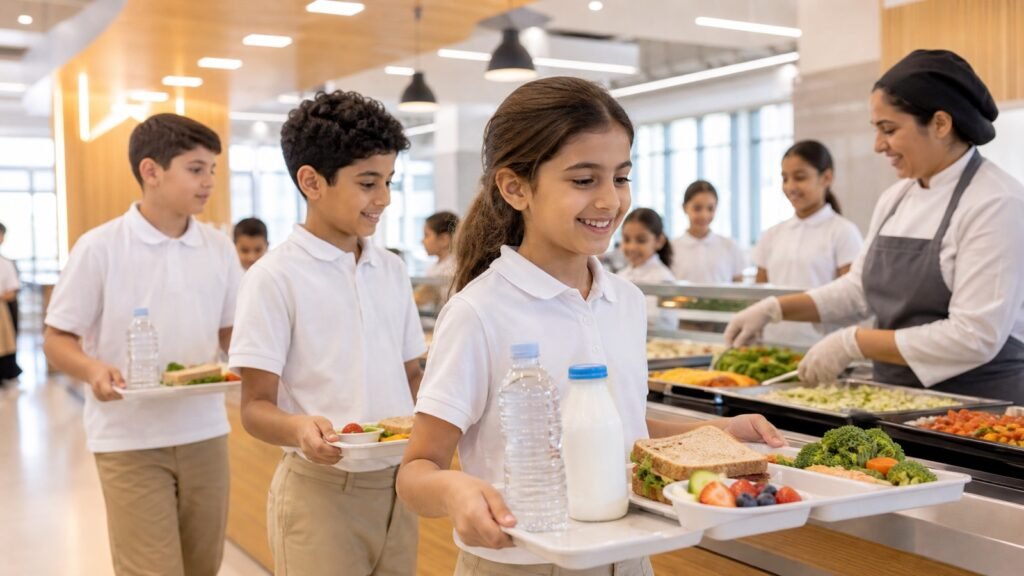
A school canteen menu may look like a simple list of sandwiches, snacks, and drinks. Behind it sits a food safety and nutrition system that Dubai Municipality monitors across hundreds of educational institutions.
For parents, the useful question is not whether every item is perfect. It is whether a child can choose a balanced meal, understand the options, and eat safely during a long school day.
How Dubai monitors school canteens
Dubai Municipality says it supervises 456 educational institutions each year with a specialist team of five food safety inspectors. The work includes field visits, menu review, staff training, and daily monitoring through the DM Checked system.
Inspectors look at more than the food displayed on a counter. Storage temperatures, preparation, transport, staff hygiene, cleaning, records, and the condition of the canteen all affect safety. If a product or practice does not comply, the Municipality can require corrective action, withdraw an item, or stop it from being offered.
The scale of the programme is reassuring, but parents should still report a genuine concern. A school sees what happens every day, while an inspector sees the site at particular times. Clear information from a parent can help the school investigate quickly.
What the colour categories mean
School canteens use the Smart Food Choices system, which groups food into green, yellow, red, and black categories. The colours help schools judge how suitable an item is and how often it should appear.
Parents do not need to memorise a technical classification. The practical aim is to make healthier everyday choices easier and restrict products that do not fit school nutrition standards. Fresh fruit, vegetables, whole grains, water, and low fat milk are among the choices encouraged by Dubai Municipality.
A colour also does not tell you everything about a particular child’s needs. A food that suits most pupils may contain an allergen, conflict with a medical diet, or be unfamiliar to a child who then eats nothing. Ask the school for its current menu and its colour key if you want to understand how individual items are classified.
Helping a child choose lunch
Look at the canteen menu together before the school week begins. Pick one main item, one fruit or vegetable option, and water where available. This gives a child a simple pattern to follow when friends and attractive packaging compete for attention.
If the school uses a prepaid account, set a sensible limit and review purchases without turning the conversation into an interrogation. A child who repeatedly buys only a drink may dislike the available food, feel rushed at lunch, or struggle with the queue. The transaction list can start a useful conversation, but it cannot explain the reason by itself.
Encourage children to notice how lunch makes them feel during afternoon lessons. A filling meal with water may support concentration better than several sweet snacks. Avoid describing food as a reward or punishment. Children learn more from calm, repeated choices than from guilt.
Allergies need a separate plan
A food safety programme does not remove the need for an individual allergy plan. Tell the school in writing about any diagnosed allergy, the signs of a reaction, emergency medicine, and who should be contacted. Update the plan when medical advice changes.
Ask how the canteen handles ingredient information and contact between foods. Do not rely only on what an item looks like. A plain pastry, sauce, or packaged snack may contain an ingredient that is not obvious.
Older children should know the name of their allergen and understand that sharing food can be risky. Younger children need close support from school staff. If a menu item changes supplier or recipe, confirm it again rather than assuming the earlier answer still applies.
When lunch comes from home
A packed lunch has its own safety challenges in the Dubai heat. Use a clean insulated bag and a suitable cold pack for food that needs to remain chilled. Wash fruit and vegetables, keep raw ingredients away from ready food, and clean reusable bottles daily.
Choose portions your child can realistically finish during the available break. Complicated containers and food that takes too long to eat often return home untouched. Ask the child which items travelled well and adjust without wasting food.
Follow the school’s rules for nuts, shared food, and prohibited items. Those rules may protect another pupil with a serious allergy even when your own child has no restriction.
What to do when something seems wrong
Start by recording the food, date, purchase time, symptoms, and any packaging or receipt. Contact the school promptly and keep the item safely if staff ask to inspect it. Urgent medical symptoms require medical care first.
A child disliking a meal is different from a food safety incident. Be precise about what happened. This helps the school separate a quality complaint, an allergy concern, and possible contamination.
Dubai Municipality’s school food safety information explains its monitoring and awareness work. Menus and procedures can differ between schools, so the school remains the best source for today’s choices and its allergy process.
Questions people often ask
Does Dubai Municipality inspect school canteens?
Yes. It carries out field visits, menu review, staff awareness work, and daily monitoring through its digital system.
What are the four Smart Food Choices colours?
The system uses green, yellow, red, and black categories to guide suitability and how food is offered in schools.
Does a healthy category mean a food is safe for every allergy?
No. Parents must still confirm ingredients, preparation, and contact risks for the individual child.
How should I keep a packed lunch cool?
Use a clean insulated lunch bag with an appropriate cold pack for foods that need chilling.
Who should I contact about a canteen concern?
Contact the school promptly with specific details. Seek medical care first if the child has urgent symptoms.


