
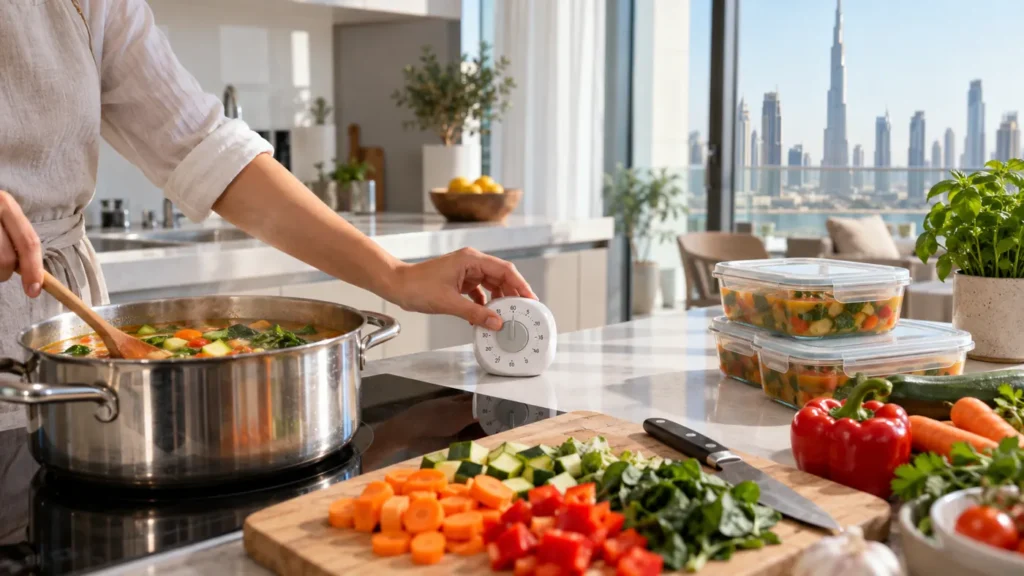
Cooling cooked food properly is one of the simplest ways to make home meal planning safer. In a busy Dubai kitchen, the temptation is to leave a large pot on the counter while everyone eats or heads out. A better habit is to portion, cool and store food with a clear plan.
Start with the official public guidance before setting out or making a decision.
Use Dubai Municipality food-safety guidance as the official reference, then apply it to the way your household cooks. Freeze or refrigerate food while it is still in good condition; storage does not make food safe again after it has been left too long.
Divide soups, stews and rice dishes into shallow containers. Smaller portions cool faster, stack more easily and are simpler to reheat without repeatedly warming the entire batch. Leave sufficient space around containers so cold air can circulate.
Keep raw ingredients separate from ready-to-eat food and use clean utensils when portioning. Label the container with the dish and date, then use older portions first. This reduces waste and prevents a freezer full of unidentified meals.
When reheating, heat the portion you plan to eat and serve it promptly. Do not repeatedly cool and reheat the same container. If a dish looks, smells or has been stored in a way that makes you unsure, discard it.
Hot weather makes careful carrying important too. Use an insulated bag for a packed meal and do not leave cooked food in a vehicle while you shop or visit an attraction. Dubai public parks guide can help with a separate outdoor plan, public beaches safety guide is useful for weather-aware family days, and UAE road-trip planning guide helps when travel is part of the schedule. For practical preparation, review our Dubai Airport family arrival guide, Dubai lost-phone safety guide and Dubai deepfake scam guide before relying on a phone or last-minute message.
A practical planning table
| Stage | Action | Purpose |
|---|---|---|
| Before you go | cooling and storage routine | Avoids an outdated plan |
| On the day | Portion food promptly | Keeps the visit manageable |
| During | Label and chill safely | Supports a safer choice |
| After | Reheat one serving | Creates a useful record |
What to prepare
- Shallow food-safe containers
- Date labels
- Clean utensils
- Insulated lunch bag
- A clear use-first routine
Small food-safety habits make weekday cooking more reliable and less wasteful.
Think about cooling as part of the recipe, not a task after dinner. Before cooking a large batch, clear a shelf in the refrigerator and set out the containers you will use. This makes it less likely that food remains in a heavy pot because there is nowhere convenient to put it. Divide family portions by what will actually be eaten: a lunch-sized serving, a dinner portion and perhaps a freezer portion. When you later open the refrigerator, that preparation prevents repeated handling and reduces the temptation to reheat more than needed. Keep the preparation area clean, wash hands between raw and cooked ingredients, and use separate utensils. These routines make a home kitchen feel calmer while supporting safer food decisions.
Questions people often ask
Why should I use shallow containers?
They cool more evenly and make portions easier to store.
Can I leave food out until bedtime?
No. Cool and store food promptly rather than leaving it at room temperature for an extended period.
Should I label leftovers?
Yes. A dish name and date reduce waste and guesswork.
Can I reheat food more than once?
Reheat only the portion you intend to eat where possible.
What if I am unsure about stored food?
Do not take a risk—discard food that may not have been handled safely.


