
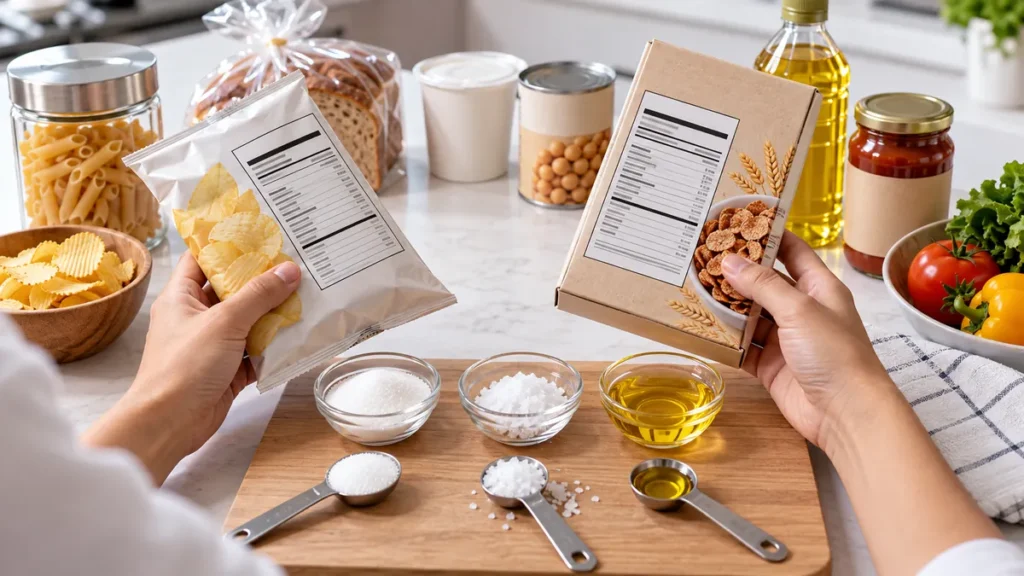
The UAE has started a phased programme to reduce sugar, sodium and fat in selected packaged foods. The change is aimed at reformulation by manufacturers and importers, not at banning every familiar product overnight. According to the official WAM announcement of the Ministry of Health and Prevention decision, implementation began on 6 October 2026 and will continue in stages until 31 December 2030.
The decision covers targeted products made locally or imported into the UAE, including food establishments in free zones. Consumers will therefore see gradual recipe and label changes rather than one universal switch on a single shopping day.
Which foods are covered first?
The published groups include bread, sweetened milk drinks, flavoured yogurt and laban, salty snacks and processed cheese. Each group has its own starting and final limits. The figures are set per 100 grams, which matters when comparing products: a serving can be smaller or larger than 100 grams.
For help reading the rest of a nutrition panel, use the Dubai food-label guide. The UAE date-label guide explains why nutrition reformulation and product expiry are separate questions.
| Product group | Initial cap per 100g | Final cap per 100g |
|---|---|---|
| Leavened bread | 444mg sodium; 6g sugar; 8.4g fat | 370mg sodium; 5g sugar; 7g fat |
| Flatbread | 384mg sodium; 6g sugar; 8.4g fat | 320mg sodium; 5g sugar; 7g fat |
| Sweetened milk drinks | 9.6g sugar | 8g sugar |
| Flavoured yogurt and laban | 12g sugar | 10g sugar |
| Potato chips and extruded snacks | 564mg sodium | 470mg sodium |
| Other processed cheese | 1,200mg sodium | 1,000mg sodium |
Why the change is phased
Food recipes must still remain safe, stable and acceptable to consumers. A phased approach gives producers time to test reformulation, change supply contracts, update labels and use compliant packaging. The official announcement says the first product group must meet its first-phase limits within nine months, while the second group has two years and three months.
Products manufactured or imported before the effective date may continue to be sold for up to one year or until expiry, whichever comes first. This explains why two packages on a shelf may temporarily show different nutrition figures without one necessarily being counterfeit.
How shoppers can use the new rules
- Compare products using the same 100g or 100ml basis.
- Check serving size as well as the headline nutrition figures.
- Remember that “reduced” does not mean unlimited.
- Look at sodium, sugar and total fat together.
- Use the ingredients list when allergies or intolerances matter.
- Keep food stored according to the package instructions.
- Report damaged, misleading or unsafe products through the relevant authority.
What the rules do not replace
A product meeting the new cap is not automatically the best choice for every person. Overall diet, serving size, allergies and medical advice still matter. Parents choosing school snacks may find the UAE school canteen guide useful, while the Dubai bread storage guide covers freshness after purchase.
The rules also do not replace normal food-safety checks. A lower-sodium snack can still be unsafe if its package is damaged or it is stored incorrectly. Use the Dubai food-safety reporting guide when hygiene, contamination or labelling may require an official review.
How businesses should prepare
Manufacturers and importers need to identify which products fall into each group, test the recipe against the correct per-100g cap, plan packaging updates and keep evidence of compliance. If meeting the initial cap would require a reduction of more than 20%, the official announcement describes an application route within 30 days; the product must still reduce by at least 20%, and the final deadline does not change.
Enforcement can include warnings, fines from AED5,000 to AED500,000, temporary closure and cancellation, depending on the violation. Businesses should rely on the legal text and current regulator instructions, not summaries circulating on social media.
Shop calmly during the transition
Consumers do not need to discard existing products simply because a new formula appears. Check expiry, package integrity, storage instructions and personal dietary needs. If buying takeaway meals as well as packaged food, the Dubai takeaway safety guide explains the separate temperature and handling checks that still apply.
The most useful habit is comparison. Read two similar labels on the same basis, choose the product that fits your household and watch portion size. The national reformulation programme supports healthier defaults, while everyday choices determine what is actually eaten.
Questions people often ask
When did the UAE packaged-food limits start?
MoHAP announced that implementation began on 6 October 2026, with phased deadlines running to 31 December 2030.
Do the limits apply to all food immediately?
No. They apply to specified product groups in phases, and transitional rules allow some earlier stock to remain on sale.
Are the limits measured per serving?
The published caps are stated per 100 grams, so shoppers should compare products on that common basis and then check the actual serving size.
Which foods are included?
The announced groups include certain breads, sweetened milk drinks, flavoured yogurt and laban, salty snacks and processed cheeses.
Does a compliant product mean I can eat any amount?
No. The caps improve product composition, but portion size, overall diet, allergies and individual medical advice still matter.


