
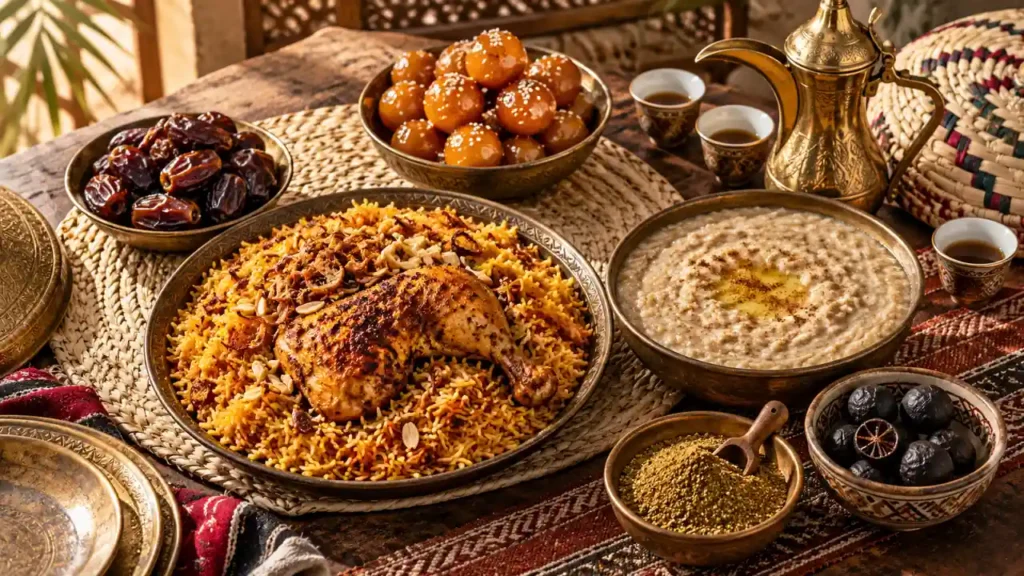
Emirati food tells the story of a trading coast, desert hospitality and family cooking. Rice, wheat, meat, fish, dates and aromatic spices appear repeatedly, but each household may season or serve a dish differently. A useful first meal is not about finding the single “correct” version. It is about recognising the main ingredients, asking how the kitchen prepares them and trying a balanced selection rather than ordering several heavy rice dishes at once.
Visit Dubai’s official Emirati cuisine guide introduces dishes and ingredients associated with local food traditions. Names can be transliterated in different ways, and neighbouring Gulf cuisines share techniques and flavours. Ask respectful questions if a menu description is unclear, especially about meat, allergens or the level of sweetness.
Start with these dishes and flavours
| Dish or ingredient | What to expect | Good first question |
|---|---|---|
| Machboos | Spiced rice served with meat or seafood | Which protein and spice level? |
| Harees | Slow-cooked wheat and meat with a soft texture | Is it served plain or with ghee? |
| Thareed | Stew layered with or poured over bread | Which vegetables and meat are used? |
| Luqaimat | Small fried dumplings with syrup or honey | Which topping is added? |
| Gahwa | Light Arabic coffee scented with spices | Is it served with dates? |
Machboos is often the easiest centrepiece for a group because it combines rice, spices and a protein. Harees is smoother and more restrained, while thareed is built around bread absorbing a savoury stew. Luqaimat are best shared while hot. Gahwa is served in small cups and is usually part of hospitality rather than a large café-style drink.
Flavours to recognise
- Loomi: dried lime that adds sharp, fermented citrus depth.
- Bezar: a spice blend whose exact recipe varies by cook.
- Cardamom: common in coffee, tea and sweets.
- Saffron: used for aroma and colour in savoury and sweet dishes.
- Dates: eaten alone, offered with coffee or used in desserts.
- Rose water: a fragrant accent in selected sweets and drinks.
- Ghee: clarified butter that adds richness to many preparations.
The UAE date-label guide is useful when buying packaged spices, dates or sweets to take home. The Dubai fresh-produce guide covers selection and transport when shopping for ingredients.
How to order a balanced first meal
For two people, consider one rice-based main, one softer or stew-based dish, a bread or vegetable side and one dessert. Ask about portion sizes before adding more. Traditional dishes can be filling, and ordering gradually reduces waste. If a diner has an allergy, do not rely on appearance: spice blends, sauces and garnishes may contain ingredients that are not obvious.
The Dubai allergen and buffet guide gives questions to ask when food is displayed or shared. The Dubai hydration guide can help visitors plan during warm-weather outings that include a meal.
Gahwa etiquette without anxiety
Arabic coffee is commonly poured from a dallah into a small cup. Accept with the right hand where practical and drink in small servings. When you have had enough, a gentle shake of the cup can signal that you do not need another pour. Customs vary by setting, so follow the host’s lead and do not worry about performing every detail perfectly.
Karak is different from gahwa. Karak is a sweet, milky spiced tea with South Asian roots and a strong place in everyday UAE life. It is not a substitute name for Arabic coffee. Visitors interested in the wider context can use the Dubai culture-planning guide to pair food with a respectful heritage outing.
Buying food to take home
Packaged dates, loomi and spice blends travel more easily than fresh or cooked food, but check airline and destination customs rules. Keep food sealed, labelled and protected from heat. Do not leave sweets or dairy-filled products in a hot car. The Dubai takeaway-food safety guide explains transport, refrigeration and reheating decisions.
Questions people often ask
What is machboos?
Machboos is a spiced rice dish commonly served with chicken, lamb, fish or seafood. Recipes and spellings vary across families and the Gulf.
What does loomi taste like?
Dried lime adds tart, earthy and slightly fermented citrus notes. It may be used whole, pierced or ground.
Is harees the same as porridge?
Its texture can resemble a thick porridge, but harees is a savoury dish made by slow-cooking wheat with meat, often finished simply.
How do I say no to more Arabic coffee?
In many settings, gently shaking the small cup indicates that you have finished. Follow the host’s cues and return the cup politely.
Is Emirati food always spicy hot?
It is aromatic and richly spiced, but not every dish is chilli-hot. Ask the kitchen about the specific preparation and spice level.


