
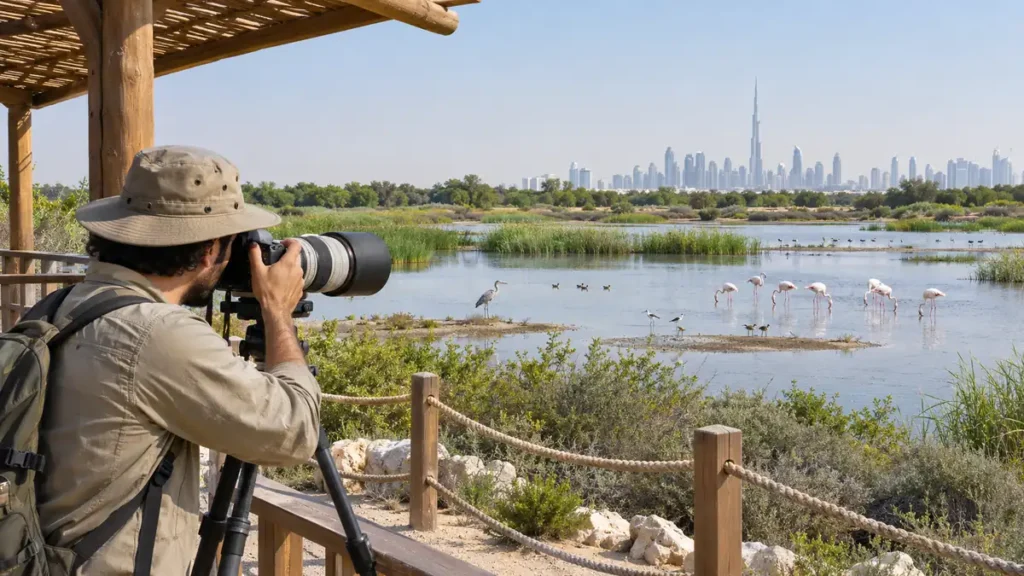
Dubai’s wetlands, desert, mountains and coast support far more wildlife than a first-time visitor may expect. A good photograph can help people appreciate that diversity, but the animal’s welfare and the protected area’s rules must come before the image. Ethical wildlife photography means observing without changing normal feeding, resting, nesting or movement.
Dubai Municipality’s official Dubai Protected Areas portal describes eight protected areas and identifies Ras Al Khor Wildlife Sanctuary and Al Marmoom Desert Conservation Reserve as public year-round places for nature connection. Check its current timing, access and booking information before travelling because conditions can change.
Choose an authorised viewing location
| Situation | Responsible approach | Avoid |
|---|---|---|
| Wetland birds | Use hides and marked viewpoints | Walking toward a flock |
| Desert wildlife | Remain on permitted routes | Driving off track for a closer angle |
| Nesting season | Increase distance and shorten the visit | Blocking a parent’s route |
| Night activity | Use an authorised guided experience | Bright lights or flash |
| Busy viewpoint | Share space and keep voices low | Crowding the best opening |
For a family outing, our Al Marmoom birdwatching guide explains how to set expectations for children. Hikers can use the preparation principles in the Hatta trail guide, while remembering that wildlife access rules remain separate.
Let the lens create distance
A telephoto lens or binoculars allows observation without approaching. If an animal stops feeding, looks repeatedly at you, alarms, changes direction or leaves, you are already too close. Back away calmly. Never surround wildlife, separate young animals from adults, touch nests or use food to bring an animal into frame.
- Stay on marked paths, hides and authorised roads
- Keep voices low and phones silent
- Use natural light and avoid flash around wildlife
- Do not play calls or sounds to provoke a response
- Pack water, sun protection and a charged phone
- Carry out every item you bring
- Follow rangers, signs and temporary closures immediately
Plan for heat and terrain
Early light is attractive, but photographers can become so focused that they overlook heat, unstable ground or changing weather. Tell someone the route, use suitable footwear and stop before fatigue affects judgement. After rain, review the wider precautions in our Dubai after-rain safety guide. For remote visits, save the contacts in the UAE emergency numbers guide.
Photograph people with the same care
Viewing platforms may include families, school groups and staff. Frame out identifiable strangers where possible and ask permission before taking a close portrait. The consent principles in our UAE photography privacy guide are useful even outside schools.
Share images without creating pressure
Do not publish a precise nest, den or rare-species location if it could attract disturbance. Keep captions factual, avoid claiming that an animal was rescued or abandoned without official confirmation, and do not encourage followers to copy an unauthorised route. Our UAE responsible-sharing guide explains why verification matters.
For an overnight outdoor plan, do not treat a reserve visit as informal camping. Use the separate Dubai camping guide and choose a lawful site. The best wildlife photographs usually come from patience, preparation and repeated quiet observation—not pursuit.
Questions people often ask
Can I photograph wildlife in every Dubai protected area?
No. Public access, timing, booking and photography rules vary. Check Dubai Municipality’s current protected-area information before visiting.
How close can I move toward a bird?
There is no universal distance for every species. Use a long lens, remain at marked viewpoints and retreat if behaviour changes.
Is flash suitable for wildlife photography?
Avoid flash around wildlife unless an authorised activity explicitly permits it; sudden light can disturb animals.
May I feed an animal to get a photograph?
No. Feeding changes natural behaviour, can harm wildlife and may violate site rules.
Should I share the exact location of a nest?
Do not disclose sensitive locations that could bring crowds or disturbance. Share general information and official visitor links instead.


