
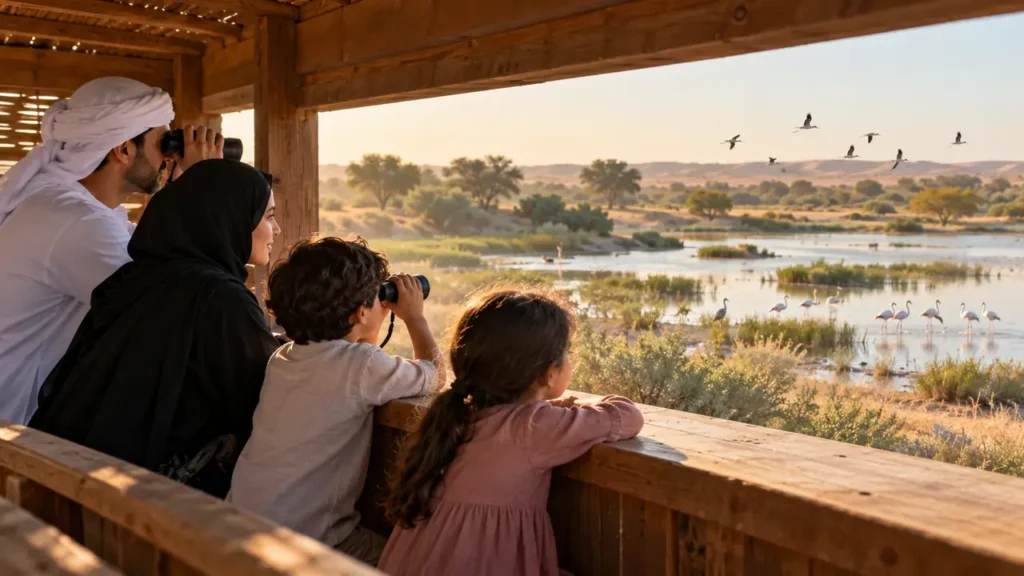
Al Marmoom Desert Conservation Reserve offers a quieter side of Dubai: open desert, lakes, native vegetation and bird hides designed for observation rather than entertainment. A rewarding visit is less about ticking off a species list and more about arriving at a suitable time, moving quietly and letting wildlife behave naturally. Families can enjoy the experience too, provided children understand that a hide is a shared quiet space and not a playground.
Dubai Municipality’s official protected-areas visitor page says families and individuals may visit during opening hours with walk-in registration, while schools, universities, tour companies and some organised groups need advance arrangements. It also notes that Emirates ID may be requested by security. Check the live page before travel because access, weather and individual hide availability can change.
Choose a simple first visit
| Planning point | Useful decision | Why it matters |
|---|---|---|
| Arrival time | Choose a cooler, well-lit period | Improves comfort and observation |
| Visit type | Confirm walk-in or pre-booking requirement | Organised groups may need approval |
| Equipment | Binoculars, camera and water for outside the hide | Keeps the visit focused and safe |
| Children | Agree quiet rules before arrival | Prevents disturbance to wildlife and visitors |
| Return plan | Save the parking pin and leave before dark | Desert access can be unfamiliar |
Do not try to visit every lake or hide in one trip. Pick one confirmed access point, allow time to observe and leave while everyone is still engaged. The Al Qudra cycling guide is useful for a separate active day, but bicycles, picnics and birdwatching should not be combined inside a protected viewing area unless signs expressly allow it.
What to bring
- Binoculars or a camera with a quiet mode.
- Emirates ID and the current location pin.
- Sun protection and practical closed footwear.
- Water kept outside any hide where drinks are prohibited.
- A small notebook or bird guide for children.
- A charged phone and an agreed return time.
- A bag for every item you bring in.
Pack lightly. Tripods, large bags and noisy equipment can crowd a hide. If photography is the goal, remember that commercial media work can require a no-objection certificate. Ordinary visitors should still avoid blocking viewing windows or photographing strangers closely without permission. The Dubai public-libraries guide offers a quiet indoor learning stop for another day.
Use the hide as a quiet shared space
Enter slowly, silence the phone and speak only when necessary. Do not play bird calls, use flash at close range or place food near the opening. Give children a simple task such as spotting three colours or movements; this encourages observation without chasing or calling to animals. Never cross a fence, leave the marked area or collect feathers, plants or stones.
The Ras Al Khor guide explains similar bird-hide etiquette, but access rules and seasonal conditions should be checked separately for each reserve. The Hatta trails guide reinforces why every protected outdoor setting needs its own route and safety plan.
Plan for desert conditions
Cooler season does not remove heat, glare or wind. Check official weather alerts, shorten the visit if children or older relatives become tired, and leave if dust reduces visibility. Do not walk into unmarked desert areas to improve a photograph. Save a precise parking or Makani location rather than relying on a vague reserve name.
The UAE public-warning guide helps interpret official alerts. Drivers should also review the Dubai car-safety checklist before a desert-edge journey, including fuel, tyres, phone charge and a basic emergency kit.
Make the visit useful for children
Explain that conservation means observing without changing what happens. Ask children to count shapes, compare beaks or sketch the landscape, but avoid promising flamingos or any other species. Wildlife sightings vary by season, time and natural behaviour. A visit is successful when the group follows the rules and notices the habitat, even if the hoped-for bird does not appear.
For a lower-commitment family outing on another day, the Dubai public-parks accessibility guide helps compare shaded, paved options. Keep meals for a permitted picnic area outside the protected hide system.
Questions people often ask
Do families need to book Al Marmoom bird hides in advance?
Dubai Municipality says families and individuals can use walk-in registration during opening hours. Organised school, university, tour and media visits can require advance booking or approval.
Should I bring Emirates ID?
Yes. The official visitor guidance says Emirates ID may be requested by security during walk-in registration.
Can children visit the bird hides?
Yes, with close adult supervision. Prepare them to stay quiet, avoid running and respect other observers.
Can I bring food into a bird hide?
Follow the signs at the specific hide. Keep food away from wildlife and use only designated areas; do not feed animals.
Are bird sightings guaranteed?
No. Birds move naturally with weather, water and season. Visit for observation rather than a guaranteed species or photograph.


