
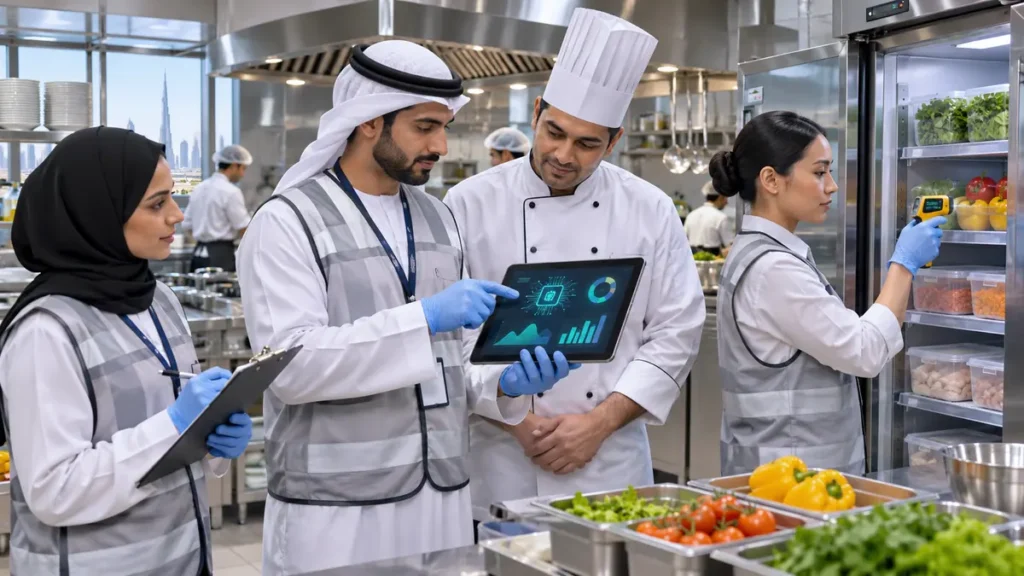
Dubai is expanding the use of artificial intelligence and data analysis in food-safety work, including inspection support and risk prediction. For diners, this does not mean a computer has replaced inspectors or that every meal is guaranteed risk-free. It means authorities can use more information to identify patterns, direct attention and respond earlier while restaurants remain responsible for safe food and customers still need to report genuine concerns clearly.
An official Emirates News Agency report on the Dubai International Food Safety Conference says discussions include AI, data analytics and smart systems for inspection and risk prediction. Dubai Municipality has also described its FoodDXB.AI food-safety platform as using predictive analytics and unified data to support regulatory decisions. These tools support oversight; they do not remove the need for trained people, verified evidence or hygienic practice.
What AI can contribute to food safety
| Use | Potential benefit | Important limit |
|---|---|---|
| Risk prediction | Helps prioritise attention | A prediction is not proof of a violation |
| Inspection data | Reveals recurring patterns | Quality depends on accurate records |
| Digital reporting | Speeds information flow | Reports still need assessment |
| Traceability | Connects products and establishments | Incomplete data can weaken the chain |
| Trend analysis | Supports preventive action | Human judgement remains necessary |
The Dubai food-safety conference guide explains the wider public-health context. The Dubai menu calorie guide covers nutrition information, which should not be confused with hygiene or allergen safety.
What diners can still observe
Customers cannot inspect a kitchen from the dining table, but they can notice whether the served food matches reasonable expectations. Hot food should arrive hot, chilled food should be appropriately cold, utensils should be clean and staff should respond seriously to an allergy question. A single aesthetic detail is not proof of unsafe food, so describe the specific product, time, temperature, foreign object, illness or handling concern.
- Check the establishment and order details
- Name the exact food and time served
- Keep the receipt and original photographs
- Refrigerate a retained sample only if authorities advise it
- Seek medical help for serious symptoms
- Report facts through the official channel
- Avoid public accusations before verification
At home, the food-temperature guide explains cooking and reheating. The Dubai refrigerator guide covers storage after a takeaway arrives.
Allergens require a direct conversation
AI may help authorities analyse information, but an allergic diner still needs a clear discussion with the establishment. Name the allergen, ask about ingredients and cross-contact, and do not rely on a generic health icon, calorie number or photograph. If the answer is uncertain, choose another option. For shared service, the Dubai buffet and allergen guide explains why utensils and surfaces matter.
Report evidence, not conclusions
A useful complaint includes the restaurant branch, date, time, order, food, symptoms or observed issue, receipt and unedited images. If several people ate together, record who ate which items and when symptoms started. Do not edit timestamps or circulate personal data. The authority can compare a report with inspection, traceability and other evidence.
The UAE responsible-sharing guide explains why unverified claims can cause harm. The UAE emergency numbers guide is for urgent danger; ordinary service complaints should use the relevant municipal channel.
Questions people often ask
Does Dubai use AI to inspect restaurants?
AI and data systems support risk prediction, inspection planning and regulatory analysis, while trained officials remain responsible for oversight.
Can AI guarantee that food is safe?
No. Safety also depends on ingredients, temperatures, hygiene, staff actions and accurate data.
What should a diner keep after a food-safety concern?
Keep the receipt, order details, dates, times and original photographs, and document symptoms factually.
Does a low calorie number mean a dish is hygienically safe?
No. Nutrition declarations and food-safety controls answer different questions.
Should diners post an accusation before reporting it?
No. Report specific evidence through the official channel so the concern can be assessed properly.


