
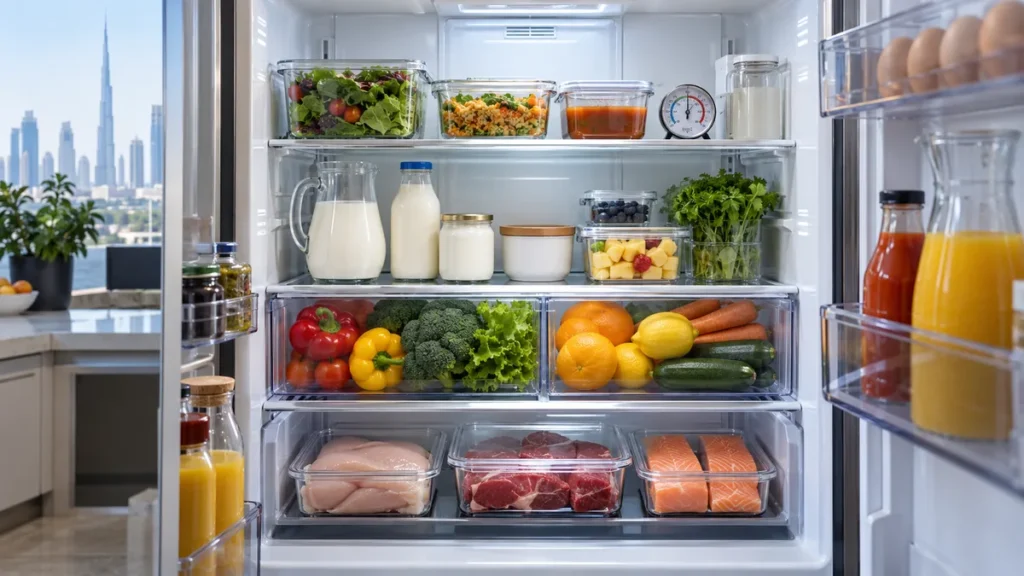
A refrigerator can feel cold while still being too warm to protect high-risk food. In Dubai, repeated door opening, overfilling, a worn seal, poor airflow or a power interruption can raise cabinet temperature without an obvious warning. A simple thermometer, sensible shelf arrangement and clear discard decisions are more reliable than smell alone.
Dubai Municipality food-safety material states that cold food should be kept at 5°C or below. That is a practical upper limit, not a target for guessing by touch. Place a refrigerator thermometer in the main compartment, check it at different times of day and respond if the temperature remains above the safe range. The official requirement appears in this Dubai Municipality health and food-safety circular.
Set up the refrigerator safely
Air must circulate around food, so avoid packing every shelf tightly or blocking internal vents. Keep ready-to-eat items above raw meat, poultry and seafood. Put raw products in sealed, leak-proof containers on the lowest shelf so that juices cannot drip onto cooked food, salads or fruit. The door is the warmest and most variable area; use it for condiments rather than the most sensitive dairy, eggs or leftovers.
| Fridge area | Best use | Main risk to avoid |
|---|---|---|
| Upper shelves | Cooked food and ready-to-eat items | Leaving food uncovered |
| Middle shelves | Dairy and sealed prepared food | Crowding the air vents |
| Lowest shelf | Sealed raw meat, poultry and seafood | Drips contaminating food below |
| Produce drawers | Washed or separated fruit and vegetables | Mixing damaged produce with fresh items |
| Door | Condiments and less temperature-sensitive items | Storing high-risk food in a fluctuating area |
Cool cooked food promptly in shallow portions rather than placing a deep, steaming pot inside. The cooked-food cooling guide explains portioning and refrigeration. Label containers with the preparation date and use the UAE food-date label guide when checking packaged items.
Daily checks that prevent waste
- Confirm that the thermometer reads 5°C or below.
- Close the door fully and inspect the rubber seal for gaps.
- Move older food to the front so it is used first.
- Discard leaking packages and clean spills immediately.
- Keep raw and ready-to-eat foods physically separated.
- Do not overload shelves or block cooling vents.
- Record when power was lost if an outage occurs.
Different foods need different decisions. Fresh fish deteriorates quickly, so consult the Dubai seafood storage guide. Fruit and vegetables benefit from inspection and dry storage where appropriate; the fresh produce guide covers selection and transport. Bread may be refrigerated or frozen for quality reasons but can develop mould even when chilled; see the bread storage guide.
What to do when cooling is unreliable
Warning signs include milk that is not properly cold, repeated condensation, water beneath drawers, an unusually warm cabinet interior, a motor that runs continuously or a temperature reading that stays above 5°C. First make sure the door is fully closed and the vents are clear. Move vulnerable food to a working refrigerator or insulated cooler with sufficient ice packs while arranging repair.
Do not keep opening the door during a power cut. Write down when electricity stopped and check the internal temperature when power returns. Food can become unsafe before it smells or looks spoiled. When the time and temperature history are uncertain—especially for meat, poultry, seafood, dairy, eggs or cooked leftovers—the safer decision is to discard the item rather than taste it.
Frozen products require a separate assessment. Items that still contain ice crystals or remain refrigerator-cold may be handled differently from food that has fully thawed and warmed. The Dubai home freezer guide explains freezing, labelling and defrosting decisions.
Cleaning without creating new hazards
Clean one section at a time so food does not sit out unnecessarily. Use clean cloths, food-safe products and the dilution instructions on any sanitiser. Remove detachable shelves carefully and let hot glass cool before washing to avoid cracking. Dry surfaces before returning food. Never mix household chemicals, and keep cleaning products separate from food.
Plan one weekly review: check temperature, use-by dates, leftovers, damaged produce and seal condition. This takes minutes and makes shopping more accurate. If cooked rice is stored regularly, follow the cooling and reheating steps in the rice and leftovers guide.
Questions people often ask
What temperature should a refrigerator be in Dubai?
Keep chilled food at 5°C or below. Use an appliance thermometer because the control dial does not necessarily show the real temperature inside the cabinet.
Where should raw meat be stored?
Place it in a sealed, leak-proof container on the lowest shelf, below cooked and ready-to-eat food, to prevent raw juices from dripping onto other items.
Can I judge refrigerated food by smell?
No. Harmful bacteria may be present without changing the smell, taste or appearance. Time, temperature and storage history are more important safety indicators.
What should I do during a power cut?
Keep the door closed, note the outage time and check the temperature when power returns. Move high-risk items to reliable cold storage if possible and discard them when their safe time-temperature history cannot be established.
Why should I avoid overfilling the fridge?
Overfilling blocks cold-air circulation and creates warmer pockets. Leave space around vents and between containers so the appliance can maintain an even temperature.


