
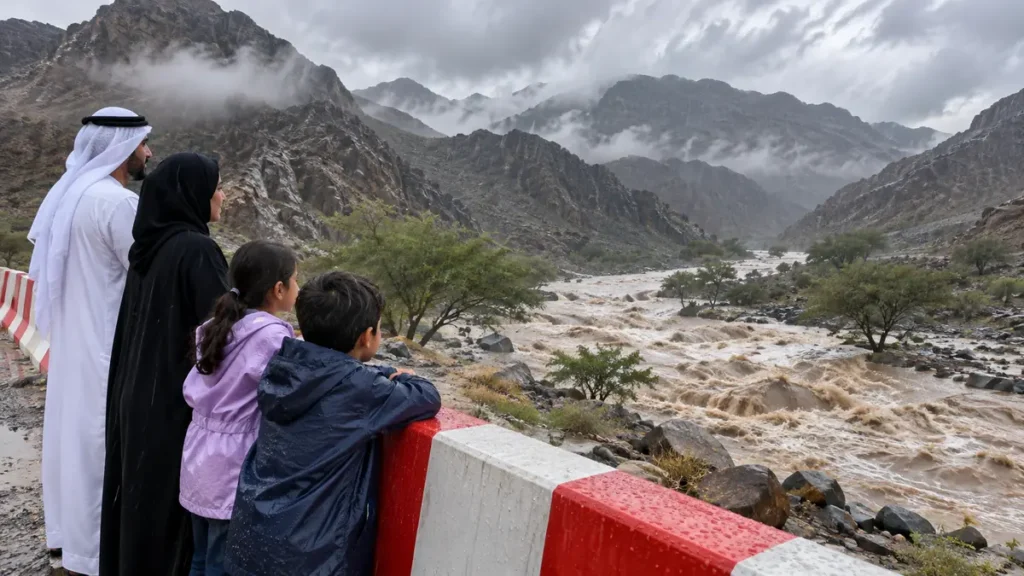
Heavy rain can turn a dry wadi, low road or underpass into a dangerous flow faster than it appears from a distance. The safest choice is not to test the depth or wait nearby for photographs. Check official forecasts, change the journey early and remain away from valleys, dams, floodwater and low ground until authorities confirm that conditions are safe.
The official NCEMA bad-weather guide tells the public to avoid flooded areas, wadis, dams and streams, move towards higher ground when necessary, follow official sources and comply with authority instructions. It also warns against circulating anonymous information.
Decide before the road becomes unsafe
| Situation | Safer action | Do not |
|---|---|---|
| Official warning | Postpone or reroute early | Wait until water blocks the road |
| Flowing wadi | Stay away on high ground | Enter for a closer look |
| Flooded road | Turn around safely | Estimate depth and drive through |
| Home in low area | Follow authority advice and prepare to leave | Ignore rising water |
| After the rain | Wait for official clearance | Assume clear skies remove the risk |
The UAE emergency-numbers guide explains what information to give responders. Drivers should also review the safe-following-distance guide before wet-weather travel.
Prepare a simple storm kit
Charge phones and power banks, keep drinking water and essential medicines ready, and save emergency contacts offline. Move loose balcony items and protect documents from water. Know how to switch off utilities if authorities instruct it, but do not enter water or a damaged area to reach a switch. Families should agree who collects children and where they will meet if networks become busy.
- Check official weather and authority alerts
- Postpone optional trips to mountains or wadis
- Charge phones and keep a power bank ready
- Carry water, medicine and protected documents
- Move vehicles away from known low points when safe
- Never walk, swim or drive through floodwater
- Wait for official clearance before returning
The UAE road-trip guide helps with route and document preparation. For public transport, the Dubai Metro park-and-ride guide reinforces the need to verify current service information.
Do not drive into water
Water can hide a damaged road, open drain, debris or a strong current. A larger vehicle does not make the crossing safe. Turn around where lawful, avoid stopping in a live lane and follow police directions. If a vehicle becomes trapped, contact emergency services and follow their instructions rather than improvising an exit into fast-moving water.
The Dubai road-safety guide covers calm driving and official enforcement information. The Dubai emergency-call guide explains why exact location and access details matter.
Verify images before sharing
Old flood videos can circulate during a new storm and send people towards the wrong place. Check the publishing authority, date and location. Do not forward an anonymous voice note as an evacuation order. The UAE responsible-sharing guide provides a quick verification routine.
After conditions improve, inspect property only when access is permitted. Photograph damage from a safe place, avoid exposed wiring and keep children away from standing water. Save official notices and insurance records, but do not delay urgent safety action to collect evidence.
Questions people often ask
Is it safe to visit a wadi after rain stops?
Not automatically. Runoff can arrive later; wait for official access and safety information.
Can a four-wheel-drive vehicle cross shallow floodwater?
Do not judge a crossing by vehicle size or visible depth. Turn around and follow authority instructions.
What information should families monitor?
Use official weather, police, emergency and local-authority alerts for the relevant location.
What should be in a basic storm kit?
Include charged communications, a power bank, water, essential medicines, protected documents and necessary child or accessibility items.
What if staying in a low area becomes dangerous?
Remain calm, contact the appropriate emergency service and follow official evacuation instructions.


