
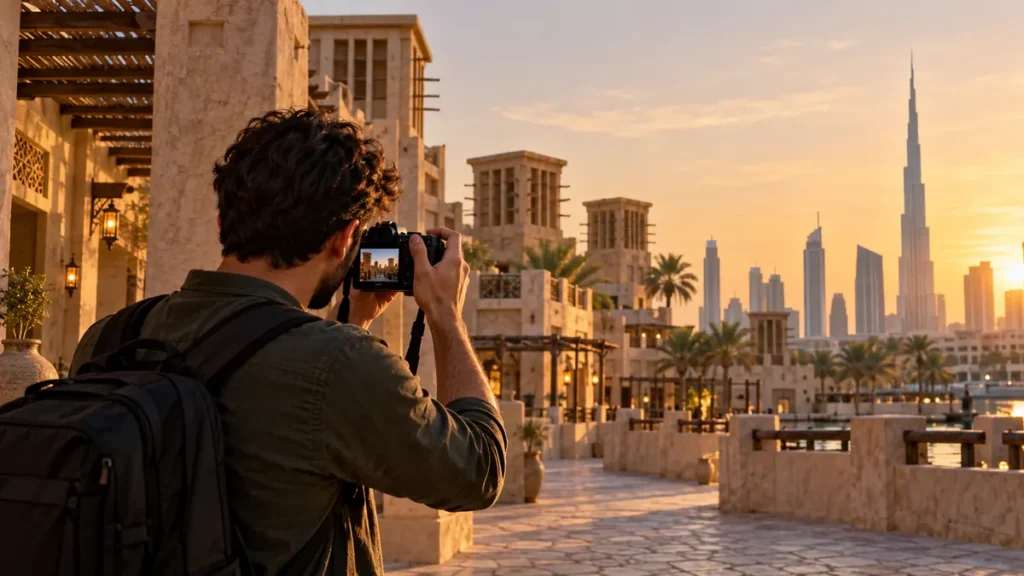
Dubai rewards photographers with striking contrasts: wind towers beside glass skylines, desert textures, waterfront reflections and busy public spaces. A good photography day, however, is not simply a hunt for attractive frames. The photographer also has to respect people, venue rules, safety barriers and the difference between making a private memory and publishing someone else’s image.
The UAE’s official copyright legislation includes rules about photos and recordings of third parties and their publication. Other privacy and cybercrime provisions can also apply. This guide is practical, not legal advice: when a person is identifiable, a venue controls access or a shoot is commercial, obtain clear permission and confirm the current official requirements.
Start with the purpose of the shoot
A family snapshot, a tripod-based architectural session, a portrait with hired talent and a branded commercial production are not the same activity. Decide what you will photograph, whether equipment could obstruct others and where the result will appear. A personal image kept privately raises different issues from a reel published to a large audience.
For a heritage setting, combine this privacy-first approach with the Dubai heritage walk guide. Museum interiors may impose separate camera or flash rules, so check the museum visit planning guide before arrival rather than assuming admission includes photography rights.
Frame the place without turning strangers into subjects
In a crowded street, wait for a clear composition, photograph from behind where appropriate, use a tighter architectural frame or return at a quieter time. If one person becomes the obvious subject, ask before taking and especially before sharing. Consent should be meaningful; a smile after a camera is raised is not always the same as permission to publish.
Children require particular care. Do not photograph a child as the main subject without a parent or guardian’s clear approval. Avoid images that reveal home entrances, vehicle plates, school details, ID cards or other personal information. The deepfake and manipulated-media guide explains why a clear face or voice can now carry risks beyond the original post.
| Photo situation | Better approach | Check before sharing |
|---|---|---|
| Architecture in a busy area | Wait, change angle or use a tighter frame | Are bystanders identifiable? |
| Street portrait | Ask the person clearly before shooting | Did they agree to publication? |
| Museum or attraction | Read the venue camera and flash rules | Is the ticket limited to personal use? |
| Tripod or lighting | Keep routes and exits completely clear | Is equipment or a permit restricted? |
| Drone image | Do not launch until every approval is confirmed | Are the location and operation authorised? |
Respect location controls and public safety
A public-looking space can still be privately managed. Security staff may restrict professional gear, lighting, tripods or photography in sensitive areas. Never photograph security installations, accident victims, private conversations or documents. Do not cross a barrier, stand in traffic or stop on a road shoulder for a shot. For route changes and controlled access, the Dubai traffic-diversion guide offers a safer planning method.
Nature photography needs distance as well as privacy. Use the Dubai nature-reserve guide to avoid disturbing animals, and the Ras Al Khor guide for hide etiquette. A dramatic image is never worth chasing wildlife or leaving a public path.
Photography-day checklist
- Confirm access hours, camera rules and any permit requirement.
- Carry minimal equipment and keep walkways, ramps and exits open.
- Ask before making an identifiable person the subject.
- Review frames for faces, plates, addresses and documents before posting.
- Keep original files and permission records for organised work.
Edit and publish responsibly
Cropping can solve a privacy problem that was missed on location. Blur or remove identifying details rather than relying on a small screen preview. Do not add a caption that assigns behaviour, identity or motive to a stranger. If someone asks for a photo of them to be removed, respond carefully and preserve any relevant permission record.
A sunrise or evening session also needs ordinary safety planning. Carry water, share the route and use the desert-trip checklist if leaving the city. The strongest Dubai photographs come from observation and patience, not intrusion.
Questions people often ask
Can I photograph Dubai buildings from a public area?
Often, personal architectural photography is possible, but venue controls, security restrictions, equipment rules and the presence of identifiable people still matter. Follow signs and staff instructions.
Should I ask before photographing a person?
Yes when the person is identifiable or the main subject. Also explain whether the image will be posted, published or used commercially.
Can I use a tripod anywhere in Dubai?
No. A venue or managed public space may restrict tripods, and equipment must never block a walkway, accessible route or emergency exit.
Is drone photography covered by the same rules?
No. Drone operations have separate aviation, registration, location and permission requirements. Do not fly until all current approvals are confirmed.
What should I check before posting a street photo?
Review it for identifiable people, children, number plates, home details, documents and misleading captions, then confirm any consent required for publication.


