
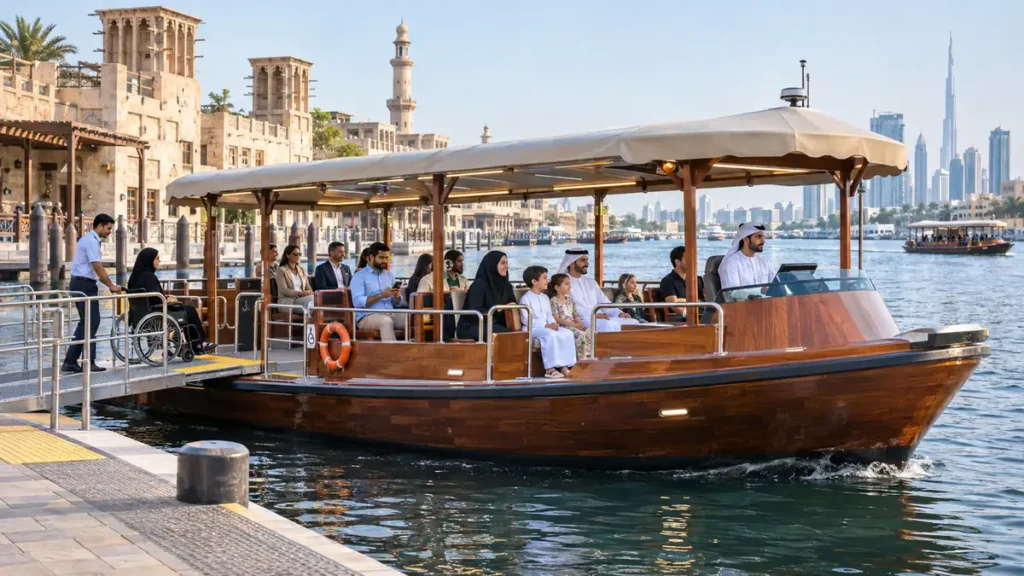
Crossing Dubai Creek by abra is both a practical journey and one of the simplest ways to see the relationship between the city’s trading districts and waterfront. Four new fourth-generation traditional abras are being added to the marine network, combining the familiar wooden character with updated passenger information, safety and accessibility features.
Dubai’s Roads and Transport Authority says in its official fourth-generation abra announcement that each vessel accommodates 24 passengers, including a dedicated space for a wheelchair user. The boats have electronic destination boards, better boarding and seating arrangements, an engine emergency-stop system and equipment aligned with marine safety requirements.
What is new on the fourth-generation abra
| Feature | Published detail | Passenger benefit |
|---|---|---|
| Capacity | 24 passengers | Clear operating capacity |
| Accessibility | Dedicated wheelchair space | More inclusive Creek journeys |
| Information | Electronic destination boards | Easier route identification |
| Safety | Emergency-stop system and marine equipment | Improved operational controls |
| Design | Traditional form with updated layout | Heritage appearance with modern use |
The new boats do not mean every passenger will encounter the same vessel on every trip. Route assignment and operating details can change, so check RTA journey information before travel. The accessible Dubai transport guide helps plan the complete route, not just the boat segment.
Plan the complete Creek crossing
Decide which side of the Creek you need and identify the correct marine station before leaving. An abra trip may be short, but walking connections through older districts, heat and busy waterfronts can add time. Use official route information for the day, keep enough balance on the accepted payment method and arrive before the final service you intend to use.
- Check the operating route and station before travelling
- Read the destination board and confirm with staff
- Wait behind safety markings until boarding begins
- Let passengers leave before moving toward the boat
- Use handrails and follow the operator’s seating instructions
- Keep children seated and luggage out of aisles
- Allow extra time for accessible boarding and connections
Visitors combining car and Metro can consult the Metro Park and Ride guide. Those carrying bags from the airport should read the Dubai Airport bus and luggage guide before assuming large cases will be comfortable on every connection.
Accessible travel needs a full-route check
A dedicated wheelchair space on the vessel is important, but a usable journey also depends on station access, connecting footpaths, lifts, kerbs and the availability of the assigned boat. Contact RTA in advance when assistance is needed and describe the route, date, wheelchair dimensions and transfer requirements. Build extra time into the itinerary.
People travelling with children, older relatives or anyone who needs steady boarding should avoid rushing. The Dubai family arrival planning guide has useful principles for dividing bags and supervision, even when the outing begins elsewhere.
Board safely and respect the working vessel
Wait for crew instructions, step only when invited and hold the handrail. Do not stand for photographs while the boat is moving, lean over the side or block the operator’s view. Keep phones, hats and loose items secure. A child should sit with a responsible adult rather than moving between seats.
Photography can be enjoyable from a seat, but do not obstruct other passengers or photograph people closely without permission. The UAE photography consent guide explains the privacy principle.
Build an Old Dubai itinerary without rushing
A Creek crossing works well with a museum, souq or heritage-area walk. Choose one or two stops rather than trying to cover every landmark. The Dubai museum family guide helps with indoor cultural planning. Carry drinking water and schedule shade breaks when walking in warm weather.
If an item is lost, note the route, station, approximate time and vessel direction before contacting the operator. The Dubai lost-property guide explains what evidence to retain.
Questions people often ask
How many passengers can a fourth-generation traditional abra carry?
RTA says each new vessel accommodates 24 passengers.
Do the new abras have wheelchair space?
Yes. Each has a dedicated space for one wheelchair user, but passengers should still check full-route accessibility.
How do passengers identify the destination?
The new vessels include electronic destination boards; confirm the route with staff before boarding.
Are all Dubai abra trips now using the new boats?
No such blanket promise has been announced. Vessel and route assignment can vary, so check current RTA information.
Can passengers stand for photographs?
Remain seated and follow the operator’s instructions; do not move around or obstruct others for a picture.


