
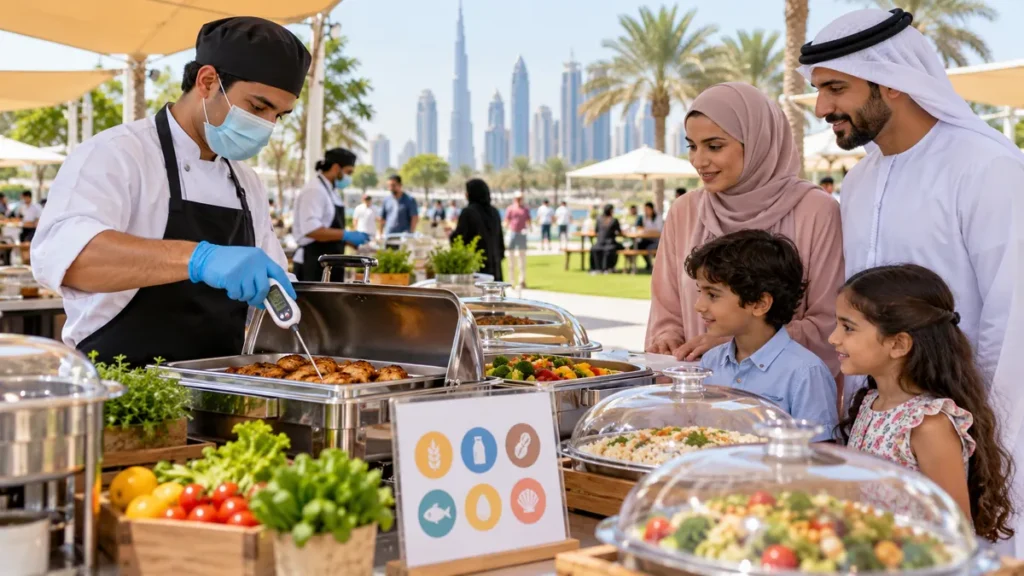
Dubai’s outdoor-event season brings temporary food stalls, busy queues and meals eaten away from a controlled dining room. Most visits are enjoyable, but customers can reduce avoidable risk by choosing an authorised-looking outlet, observing basic hygiene, asking precise allergen questions and acting quickly when food appears unsafe.
Dubai Municipality publishes official food-safety information for traders and establishments, including guidance, permits and the Dubai Food Code. Event organisers and vendors carry formal responsibilities; customers should still use visible warning signs to decide whether to buy or eat.
Check the stall before joining the queue
A busy stand is not automatically a safe one. Look for an orderly service area, protected food, separate raw and ready-to-eat preparation, clean utensils and staff who handle money without immediately touching food. A displayed licence or event permit is useful, but do not photograph personal details or enter staff-only areas.
The Dubai outdoor barbecue guide explains cross-contamination, while the UAE food-date-label guide helps with packaged items sold at markets.
| What you notice | Positive sign | Reason to pause |
|---|---|---|
| Hot food | Steaming, freshly cooked or held in covered equipment | Displayed lukewarm for an unknown time |
| Cold food | Refrigerated or kept over effective cooling | Dairy, salad or seafood sitting warm |
| Utensils | Separate tools for raw and cooked items | Same tongs crossing between tasks |
| Allergens | Staff can check ingredients and preparation | Guessing or dismissing the question |
| Payment | Clear price and receipt or digital record | Unexpected charge without explanation |
Ask allergen questions before paying
State the ingredient that must be avoided and ask about the complete dish, sauce, garnish and cooking surface. “Does this contain nuts?” is better than “Is this safe?” because safety depends on the person’s allergy and cross-contact risk. If staff cannot verify ingredients or shared equipment, choose another item.
The official allergen guidance helps customers prepare a clear request. Families packing backup snacks can use the Dubai packed-lunch guide.
Quick customer checklist
- Read the menu and price before ordering.
- Ask specific allergen questions before payment.
- Choose food cooked to order when practical.
- Check hot food is genuinely hot and cold food is kept cold.
- Keep the receipt, stall name and event location.
- Wash or sanitise hands before eating.
- Stop eating and seek help if symptoms develop.
Eat promptly and protect leftovers
Outdoor queues, walking and warm weather can stretch the time between service and eating. Eat perishable food promptly. Do not carry rice, meat, dairy desserts or cut fruit around for hours and then save them for later. If time and temperature are uncertain, discard the item rather than relying on smell.
The cooked-food cooling guide explains why deep containers cool slowly, and the rice leftovers guide covers a food that needs especially careful handling.
Respond correctly to suspected illness
Symptoms can have many causes, so record facts rather than accusing a vendor online. Note what was eaten, the time, stall name, event, companions, symptoms and medical advice. Keep receipts and packaging. Seek urgent medical help for breathing difficulty, collapse, swelling of the lips or throat, severe dehydration, blood in vomit or stool, confusion or rapidly worsening illness.
For a commercial food concern, the Dubai food-safety concern guide explains what evidence helps an official report. Contact the event organiser and Dubai Municipality through official channels rather than confronting staff during a crowded service.
Separate quality from safety
A disappointing flavour, small portion or long queue is a service issue, not proof of unsafe food. Conversely, attractive presentation does not prove correct temperature or allergen control. Describe the observable problem accurately so the right team can respond.
Parents should supervise young children near hot surfaces, skewers and crowded counters. Choose a quiet place to eat, check food temperature before serving a child and keep prams out of emergency routes.
Plan payment and records
Use the event’s recognised payment method and review the amount before tapping. A digital receipt or bank record can help identify the transaction. The UAE receipts and consumer-records guide shows how to preserve useful evidence without posting card or personal data publicly.
A safe food-event visit is based on small decisions: a clean stall, a clear allergen answer, food held at the right temperature, prompt eating and a factual report when something genuinely goes wrong.
Questions people often ask
How can I tell whether an outdoor food stall is safe?
Look for protected food, clean equipment, separation of raw and cooked tasks, effective hot or cold holding and staff who can answer ingredient questions.
What should I ask about a food allergy?
Name the exact allergen and ask about ingredients, sauces, garnishes, shared fryers, grills and utensils. Do not eat when the answer is uncertain.
Can I keep event food for later?
Only when it has remained under safe temperature control and can be chilled promptly. Discard perishable food with an uncertain history.
What evidence helps a food-safety complaint?
Keep the receipt, stall and event details, time, food description, packaging, photographs of the product and a factual symptom timeline.
When should suspected food illness receive urgent medical help?
Seek urgent help for breathing difficulty, collapse, throat swelling, severe dehydration, confusion, blood in vomit or stool, or rapidly worsening symptoms.


