
Bread can turn stale or mouldy quickly in a warm, humid kitchen, yet putting every loaf in the refrigerator is not automatically the best answer. The right method depends on the bread, how soon it will be eaten, whether it contains perishable fillings and how well it is protected from heat, moisture and air.
Dubai Municipality says food businesses are expected to control bakery products safely during preparation, storage, display and transport. At home, the same basic principle applies: buy from a clean source, keep bread covered and discard it when spoilage appears. The Municipality’s official food-safety information also gives residents the 800900 contact for food-establishment observations or complaints.
Choose storage by how soon you will eat it
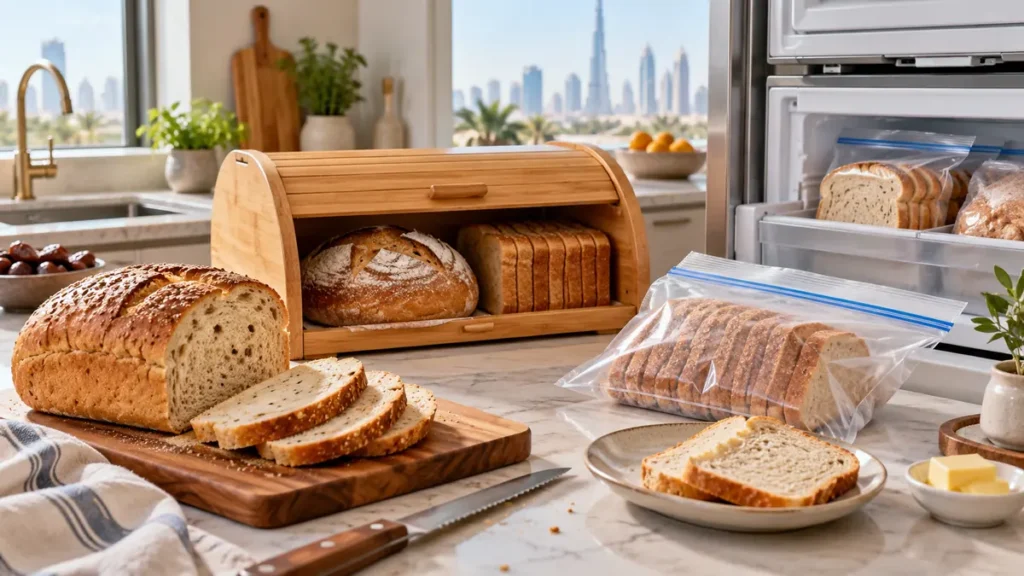
For bread you expect to use soon, keep it at room temperature in a clean, dry, closed bag or bread box away from sunlight, the cooker and the sink. The container should limit drying without trapping obvious condensation. In a very humid kitchen, check daily for moisture and mould.
If a loaf will not be finished soon, freezing is usually more useful than leaving it on the counter. Slice it first, separate portions and remove excess air from the freezer bag. Label the package with the bread type and freezing date so the oldest portion is used first.
| Bread situation | Practical storage | Main check |
|---|---|---|
| Daily loaf | Covered, cool, dry cupboard or bread box | No condensation or mould |
| Extra sliced bread | Freeze in meal-size portions | Bag sealed and dated |
| Filled sandwich | Follow the most perishable filling | Keep chilled when required |
| Warm fresh bread | Cool before sealing | Avoid trapped steam |
| Visible mould | Discard the whole bread item | Do not taste or trim |
Why the refrigerator changes bread
Cold storage can slow mould in some conditions, but ordinary refrigerator temperatures often make bread firm and stale faster. Refrigeration may still be appropriate when a product label requires it or when bread contains perishable fillings. Otherwise, use room-temperature storage for immediate eating and the freezer for longer holding.
The Dubai home-freezer guide explains labelling and freezer organisation. If the bread is part of a prepared meal, follow the Dubai packed-lunch guide for the filling as well.
Bread-storage checklist
- Cool fresh bread before sealing it in a bag.
- Keep the storage area clean, dry and away from heat.
- Use clean hands or tongs rather than reaching in repeatedly.
- Freeze spare slices in small, dated portions.
- Defrost only the amount you plan to use.
- Discard bread with visible mould instead of trimming it.
- Follow the label when a product has special storage instructions.
Freeze and defrost with less waste
Place slices flat until frozen so they do not become one solid block. Toast frozen slices directly when the appliance permits, or thaw a covered portion away from raw food and dirty surfaces. Repeatedly warming and refreezing the entire loaf damages quality and makes date control difficult.
The UAE food-date-label guide explains why a best-before date is mainly about quality, while unsafe handling can still make a product unsuitable earlier. The cooked-food cooling guide is useful when bread accompanies leftovers.
Do not trim mould from bread
Bread is porous, so mould can extend below the visible patch. The US Food and Drug Administration advises that the safest practice is to discard mouldy food, and its food-safety material specifically notes that mould can penetrate soft foods. Do not smell a mouldy loaf closely or taste an unaffected-looking slice.
Put the bread in a closed bag, clean the bread box or shelf, inspect nearby products and wash your hands. If several recently purchased loaves show unusual spoilage, keep the receipt and packaging and report the issue factually.
The Dubai food-safety concern guide lists useful evidence. The UAE food-allergy guide is relevant when labels mention sesame, wheat, milk, eggs or other allergens.
Match the method to the loaf
Crusty bread, soft packaged slices, flatbread and enriched bread lose quality differently. Use the manufacturer’s instructions where provided and judge home-baked bread by its ingredients and handling. Bread containing cheese, cream, meat or egg needs controls for the filling, not just the bread.
The goal is not to make bread last indefinitely. Buy a realistic quantity, protect the loaf from heat and moisture, freeze planned extras early and discard the whole item when mould appears.
Questions people often ask
Should bread be kept in the refrigerator in Dubai?
Not automatically. Refrigeration can make plain bread stale faster. Follow the label, keep short-term bread cool and dry, and freeze extras for longer storage.
Can I cut mould off bread and eat the rest?
No. Bread is porous and mould may spread below the visible area. Discard the entire affected loaf or bread item.
Should fresh bread cool before it is bagged?
Yes. Sealing warm bread can trap steam and create condensation, which encourages quality loss and spoilage.
What is the easiest way to freeze sliced bread?
Divide it into small portions, remove excess air, seal and date the bag. Freeze slices so you can remove only what is needed.
Where can I report a food-safety concern in Dubai?
Dubai Municipality accepts food-related observations through its official channels, including the 800900 contact listed in its food-safety information.


