
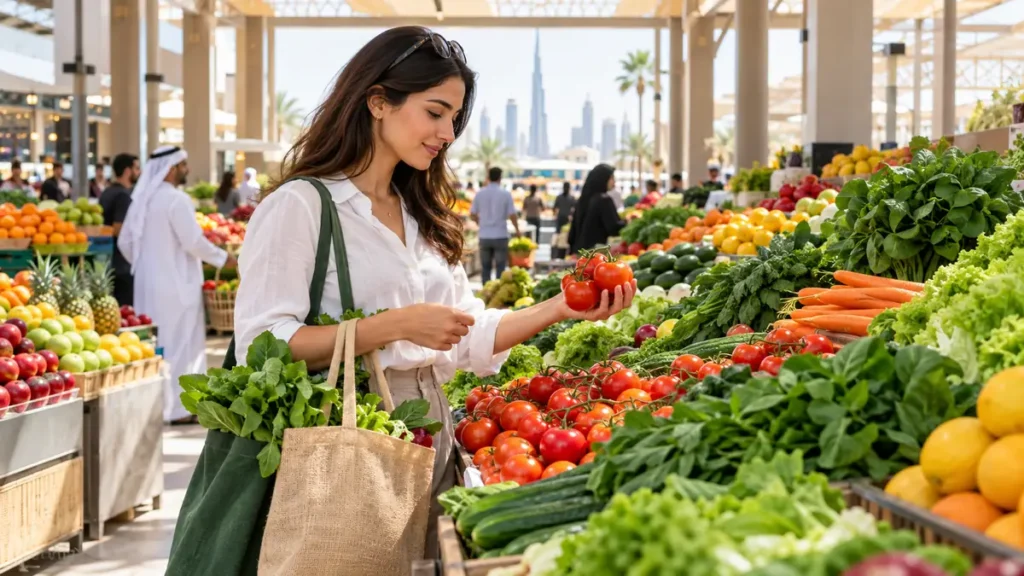
Fresh-produce shopping in Dubai is easiest when the plan extends beyond choosing the best-looking fruit. Heat exposure on the journey home, bruising in an overfilled bag and storing everything in the same place can shorten quality and increase waste. Dubai Municipality’s official public-utility information explains that its Food Safety Department inspects food establishments and products for compliance, while shoppers still need to handle purchases safely after sale.
This guide applies to municipal markets, supermarkets and neighbourhood produce shops. It does not promote one seller. The useful habit is to buy an amount the household can use, inspect each item and move temperature-sensitive produce home promptly.
Write a flexible list
Plan meals first, then list produce by function: salad vegetables, cooking vegetables, fruit, herbs and one item to freeze. Leave room to substitute when an item is overripe or poor value. Buying a large box only saves money if it can be eaten, shared or preserved before quality drops.
The UAE household food-waste plan helps turn existing ingredients into meals before another shop. If packaged produce has a date label, use the UAE food date-label guide to distinguish safety information from quality wording.
| Produce | What to look for | Storage starting point |
|---|---|---|
| Leafy greens | Crisp leaves, no slime or strong odour | Refrigerate dry in breathable protection |
| Tomatoes | Firm for later use; softer for immediate use | Keep whole fruit according to ripeness, away from damage |
| Berries | Dry surfaces, no mould in hidden layers | Refrigerate and wash just before eating |
| Root vegetables | Firm, unbroken, no soft wet patches | Cool, dry and ventilated as appropriate |
| Fresh herbs | Bright leaves and clean stems | Refrigerate using a method suited to the herb |
Inspect more than the top layer
Look at several sides of a box or bunch. Avoid produce with mould, leaking liquid, pest damage or an unusual odour. A small cosmetic mark is different from active decay; shoppers can often choose imperfect but sound produce for cooking. For pre-cut fruit or vegetables, check that the pack is intact and kept refrigerated.
If packaging or hygiene creates a concern, the Dubai food-safety reporting guide explains what details to record. Do not taste unwashed produce in a market unless sampling is officially offered under suitable conditions.
Pack and transport with temperature in mind
- Place heavy melons and root vegetables below delicate berries and herbs.
- Keep raw meat, fish and poultry in separate leak-resistant bags.
- Use an insulated bag when chilled cut produce has a long journey.
- Go directly home instead of leaving groceries in a parked car.
- Protect produce from crushing in a full trolley or taxi boot.
- Keep receipts until quality and quantity are checked at home.
- Move damaged items into the “use first” section of the kitchen.
Do not wash everything immediately
Washing before storage can leave moisture that encourages deterioration, particularly on berries and leafy items. Unless a specific item benefits from another method, store it clean and dry, then rinse under safe running water before preparation. Soap and household cleaning chemicals should not be applied to food.
Keep refrigerator shelves organised and avoid overpacking, which can restrict cold-air movement. The Dubai freezer guide explains how to freeze suitable produce safely, while the family meal-prep guide covers clean preparation surfaces and batch cooking.
Separate ripening from ready-to-use produce
Some fruits continue ripening after purchase and can affect nearby items. Instead of placing the full shop in one bowl, create three groups: use now, ripen at room conditions, and refrigerate. Check the groups daily. Cut away only minor physical damage from otherwise sound produce; discard mouldy soft fruit rather than trying to rescue the rest of the item.
The Dubai food-label guide remains useful for bagged salads, frozen vegetables and prepared fruit, where ingredients, allergens and storage directions appear on a package.
Turn the purchase into a use order
Use fragile herbs, berries and very ripe fruit first. Firmer root vegetables and some whole fruits can support later meals. Write two or three “use first” items on the refrigerator door so they are not forgotten behind newer shopping.
A produce market trip should reduce waste, not create it. Buy for real meals, inspect carefully, protect the journey home and choose storage based on the item rather than putting everything in the refrigerator automatically.
Questions people often ask
Should I wash fruit and vegetables before storing them?
Usually it is better to keep produce dry and wash it under safe running water shortly before preparation, unless the specific item requires a different method.
Can I leave fresh produce in a parked car?
No. Dubai heat can quickly reduce quality, especially for herbs, berries and chilled cut produce. Go home promptly.
How do I choose leafy greens?
Look for crisp leaves without slime, strong odour, heavy bruising or widespread yellowing.
What should I do with damaged produce?
Use slightly bruised but sound items promptly. Discard produce with mould, leaking decay or an unsafe odour.
Where can I report a food-safety problem in Dubai?
Use Dubai Municipality’s current official reporting channels and provide the seller, product, date, receipt and photographs where available.


