
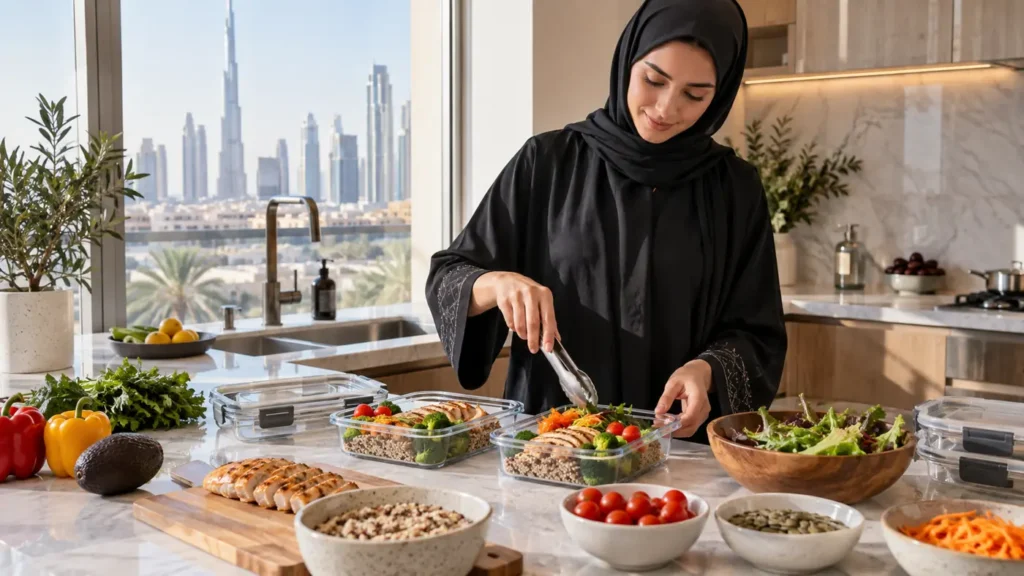
Family meal prep can save time during a busy Dubai week, but efficiency should never come from leaving cooked food on the counter, using the same board for raw meat and salad, or filling the fridge so tightly that cold air cannot circulate. A useful weekly routine begins with a modest menu and a clean kitchen, then separates cooking, cooling and storage into deliberate steps.
This guide is for everyday household planning, not a substitute for medical advice or official food-safety instructions. Use the Dubai Municipality official website for current public guidance. People who are pregnant, older, very young or immunocompromised may need additional precautions recommended by a qualified health professional.
Plan fewer components, not seven complete menus
Choose ingredients that can be combined in different ways: one cooked grain, two vegetable preparations, a sauce stored separately and one or two proteins. This reduces repeated work without forcing the household to eat the identical plate every day. Check what is already in the refrigerator and freezer before shopping. Our Dubai home-freezer guide helps with deciding what can be used first and how to defrost it more safely.
Write the cooking order before starting. Prepare ready-to-eat vegetables and fruit before handling raw meat, poultry or seafood, or clean and sanitise the work area thoroughly between tasks. Use separate equipment where possible. Wash hands at the right moments, not only at the beginning, and replace cloths or utensils that have touched raw ingredients.
Cook, portion and cool with purpose
Cook food thoroughly using a reliable method appropriate to the ingredient. Visual appearance alone is not a dependable measure for every food. Once cooked, divide large batches into smaller, shallow containers so they cool more evenly. Do not leave a deep pot to cool for hours before remembering it. The cooked-food cooling guide explains why portion size and prompt storage matter.
Label every container with the dish and preparation date. A label prevents repeated opening and guessing and helps the household use older food first. Store sauces separately when that protects texture, and keep raw items where they cannot drip onto cooked or ready-to-eat food. The refrigerator should be organised, not packed solid.
| Stage | Safer habit | Common mistake |
|---|---|---|
| Shopping | Keep chilled food cool and return home promptly | Leaving groceries in a hot vehicle |
| Preparation | Separate raw and ready-to-eat work | Reusing boards or utensils without cleaning |
| Cooling | Use shallow, manageable portions | Leaving a deep pot at room temperature |
| Storage | Label, date and rotate food | Keeping unidentified containers |
| Serving | Reheat only the portion needed | Repeatedly warming the full batch |
Weekly meal-prep checklist
- Check the fridge and freezer before choosing the menu.
- Clear and clean work surfaces before preparing food.
- Use separate utensils or fully clean them between raw and ready-to-eat foods.
- Portion cooked food into labelled containers promptly.
- Pack tomorrow’s meal only after confirming how it will stay chilled.
Pack lunches without undoing the preparation
A carefully prepared meal still needs temperature control during transport. Use a clean insulated bag and suitable cold packs for food that must remain chilled. Keep the bag away from direct sun and do not leave it in a parked car. The Dubai packed-lunch guide covers the school and workplace handover, while the cooked rice and leftovers guide addresses a food that needs particularly disciplined handling.
For variety, prepare different finishing ingredients rather than extra full dishes. Add fresh herbs, a separate dressing or a crunchy topping just before eating. Families planning an outing can use the Dubai public parks guide and public beach guide to assess shade, facilities and carrying time before deciding whether a chilled meal is practical.
Review the routine at the end of the week. Note what was eaten, what was wasted and which portions were too large. Smaller batches may be safer and more economical than filling every container. If the storage history of a meal is uncertain, discard it rather than relying on smell or appearance alone.
Questions people often ask
Can I prepare an entire week of meals at once?
Only if each dish can be cooked, cooled, stored and used safely. A mix of refrigerated and frozen portions may be more practical than keeping everything chilled for many days.
Why use shallow containers?
Smaller, shallow portions cool more evenly and are easier to store and reheat without disturbing the whole batch.
Can raw and cooked foods share the same chopping board?
Use separate equipment where possible, or clean and sanitise it thoroughly before moving from raw food to ready-to-eat food.
Should meal-prep containers be labelled?
Yes. Add the dish name and preparation date so the household can rotate food and avoid guesswork.
What should I do if I cannot remember how long a meal was left out?
Do not take the risk. Discard food when its time and temperature history is uncertain.


