
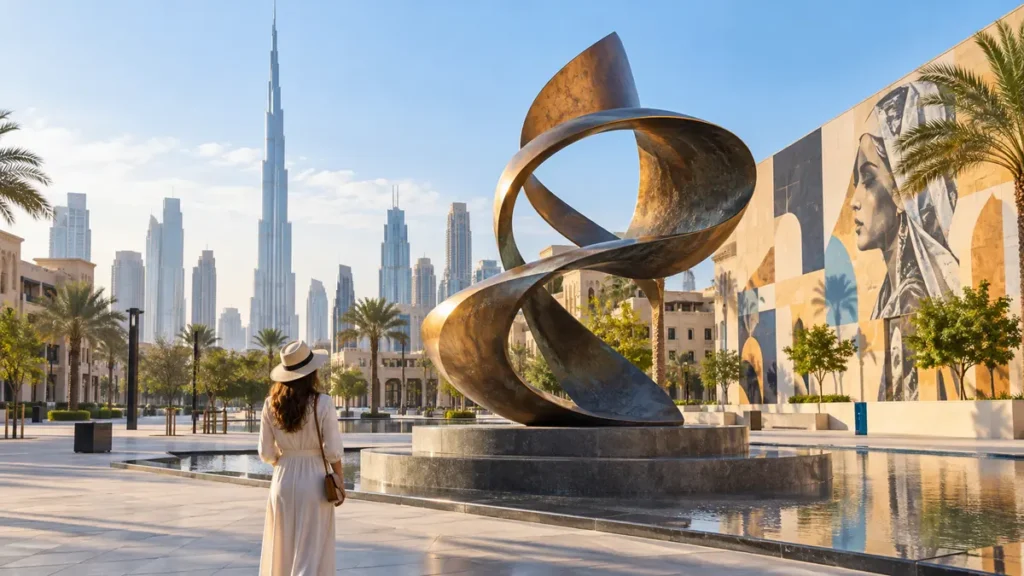
Dubai’s public art is increasingly part of the city rather than confined to galleries. Murals, sculptures and site-specific installations can appear in parks, historic districts, waterfronts and neighbourhood spaces. The official Dubai Public Art Strategy announcement describes a programme led by Dubai Culture to turn streets, neighbourhoods and public areas into accessible cultural destinations.
A good public-art visit is not simply a hunt for colourful backdrops. The setting, the artist’s idea, the route through the space and the people using it are part of the experience. This guide helps residents and visitors plan a self-directed outing without presenting temporary works as permanent or encouraging intrusive photography.
Start with an official description
Before travelling, check the latest Dubai Culture or Government of Dubai announcement for the artwork, venue and access conditions. Public works can be permanent, temporary, moved for maintenance or installed as part of a seasonal programme. A dated social post may show a piece that is no longer available.
Dubai’s strategy covers sculptures, paintings, murals and installations across the emirate. One example is the Hatta installation described in the official Hatta public-art announcement, which shows why a work should be understood in relation to its landscape rather than treated as an isolated object.
| Planning question | What to check | Why it matters |
|---|---|---|
| Is the artwork current? | Official announcement and recent venue information | Temporary installations can move or close |
| Is the space public? | Opening hours, gates and entry conditions | Public visibility does not always mean 24-hour access |
| Can I photograph it? | Signs, staff instructions and people in the frame | Artwork access and personal privacy are separate issues |
| How will I arrive? | Public transport, walking route and parking | Some works sit within large districts |
| Is the route accessible? | Surface, shade, seating and step-free access | Conditions differ between urban and landscape sites |
Build a route around one district
Choose one compact area rather than crossing Dubai for several disconnected pieces. Al Shindagha can pair art with a heritage walk, while parks or waterfront districts may be better for a slower outdoor visit. The Dubai heritage walk guide explains how to plan shade, footwear and rest stops in historic areas.
If the day includes indoor culture, use the Dubai museum visit guide to protect timed entry and family pacing. The Dubai Design Week guide is useful when public installations form part of a scheduled design programme, but the event calendar should not be confused with year-round access.
Look before reaching for the camera
Read any plaque or QR information first. Notice how the work changes from different angles, how people move around it and how its materials respond to light. Avoid climbing, sitting on, leaning equipment against or touching an artwork unless the official description explicitly invites interaction.
The Dubai public photography guide covers consent and respectful framing. A public artwork may be photographable while a nearby family, worker or child should not become the unintended subject. Keep tripods and bags out of walkways and obey restrictions on professional shoots.
A respectful public-art checklist
- Confirm the work and location through a current official source.
- Check opening hours, entry conditions and transport before leaving.
- Read the artwork label or official description before photographing.
- Do not touch, climb or attach anything to the work.
- Keep paths, ramps and seating clear for other visitors.
- Avoid identifiable people in photographs unless consent is clear.
- Take all rubbish away and report damage to venue staff.
Make the outing comfortable
Outdoor art can involve more walking than expected. Carry water, use sun protection and schedule open-air sections outside the strongest heat. The Dubai public parks guide helps with outdoor timing, while the UAE school-run safety guide is relevant when a route crosses busy roads.
Families can give children a simple observation task: find a repeated shape, describe a material or sketch the work without touching it. For a quieter follow-up, the Dubai public libraries guide offers a way to continue learning about art and local history.
Leave room for interpretation
Public art does not need one “correct” reaction. Compare what you notice before reading the description, then revisit the work after learning its context. The most useful route is one that encourages attention to the place, respects other people and treats the artwork as part of a shared civic space.
Questions people often ask
Is all public art in Dubai free to view?
Many works are visible in public spaces, but access can depend on the venue, opening hours or an event ticket. Check the official location information before travelling.
Can I touch or climb a public sculpture?
Only when the official description clearly says the work is interactive. Otherwise, view it without touching, climbing or placing objects against it.
Can I photograph Dubai public art?
Personal photography may be possible, but follow venue signs and protect the privacy of people nearby. Professional equipment or commercial shoots can require separate permission.
How do I know whether an installation is still available?
Use a current Dubai Culture, government or venue announcement. Temporary works shown in older posts may have moved or closed.
What is the easiest way to plan a public-art route?
Choose one district, verify two or three nearby works, then add transport, shade and rest time instead of trying to cross the city in one outing.


