
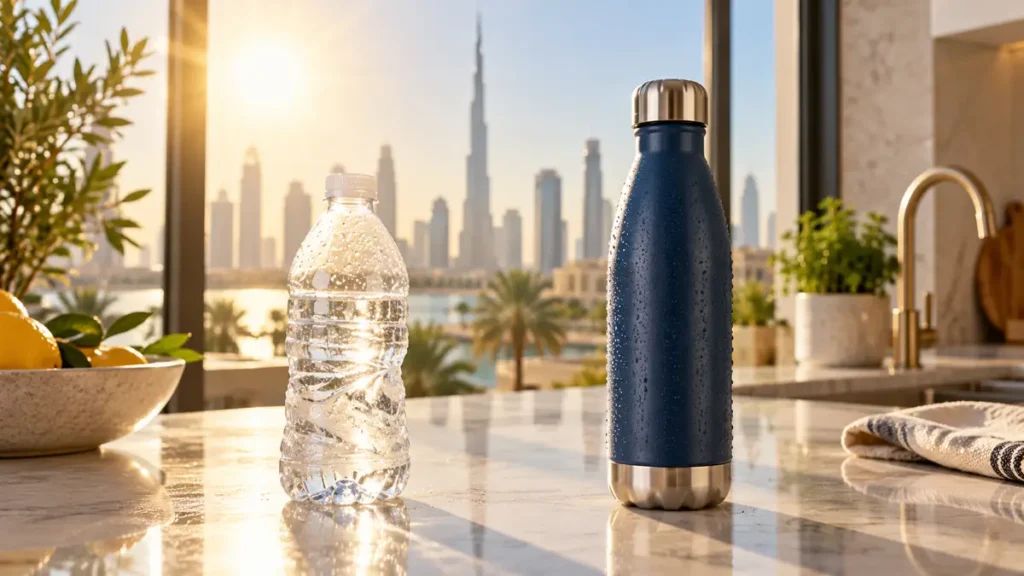
A small plastic water bottle is convenient for one journey, but it is not designed to become a permanent refill bottle. Repeated handling, scratches, heat and poor cleaning can make a single-use container harder to keep hygienic. The simplest approach is to use it for its intended single use and switch to a purpose-made reusable bottle for daily refilling.
Dubai Municipality’s official food-safety advice warns against reusing single-use water bottles and other containers that were not designed for repeated use. That does not mean every briefly refilled bottle causes illness; it means the container’s design, cleaning limits and handling create avoidable uncertainty. Use a durable bottle intended for repeated washing instead.
Why heat and handling matter
A bottle left in a parked car can become very warm. Heat also speeds microbial growth when the mouthpiece has been contaminated by hands or drinking. The more often a thin bottle is squeezed, dented and washed, the more difficult it becomes to inspect and clean. Never drink water that looks cloudy, smells unusual or comes from a bottle with a damaged seal.
| Situation | Better action | Reason |
|---|---|---|
| Unopened bottle stored cool | Check seal and date, then use normally | Packaging remains intact |
| Opened bottle left in a hot car | Discard it | Heat and contamination are uncertain |
| Single-use bottle repeatedly refilled | Replace with a reusable bottle | Not designed for ongoing cleaning |
| Reusable bottle used daily | Wash, rinse and dry fully | Reduces residue and moisture |
| Bottle shared by several people | Avoid sharing mouthpieces | Limits transfer of germs |
Choose a reusable bottle
Select a food-contact bottle from a reputable supplier with a wide enough opening to clean. Check whether the bottle, lid, straw and seal are dishwasher-safe or must be hand-washed. An insulated bottle can keep water cooler, but insulation does not make dirty water safe. Replace cracked lids, damaged seals and scratched interiors.
The Dubai single-use foodware guide explains the wider shift away from disposable items. The Dubai food-label guide is useful when choosing packaged drinks rather than assuming marketing words prove a health benefit.
Daily bottle-care routine
- Wash hands before filling the bottle.
- Use potable water from a trusted source.
- Wash the bottle, cap, seal and straw as directed.
- Rinse away detergent and allow every part to dry fully.
- Keep the bottle out of a parked car and direct sun.
- Do not top up old water indefinitely; empty and clean the bottle.
- Replace parts that smell, crack, leak or cannot be cleaned.
Think about the water source too
A clean bottle cannot correct a contaminated source. Buildings should maintain their water systems properly, and residents should report unusual colour, smell or taste rather than masking it with flavouring. The Dubai water-tank hygiene guide explains household checks. For packaged products, use the UAE date-label guide to distinguish safety-related dates from quality guidance.
Pack water safely for school and work
Fill a clean bottle shortly before leaving and keep it shaded. A child’s bottle should be easy to open, labelled according to school policy and cleaned every day. Do not freeze a bottle unless the manufacturer permits it, because expansion can damage the container or seal. The UAE school-lunchbox guide covers cold packs and perishable foods.
If a bottle or packaged drink appears unsafe, keep the product and receipt where practical and report through the correct channel. The Dubai food-safety reporting guide explains how a precise product name, batch detail and purchase location make a report more useful.
Reduce waste without unsafe reuse
Waste reduction does not require turning disposable packaging into permanent food equipment. Carry one durable bottle, refill it from a safe source and maintain it. For household planning, the UAE food-waste guide provides a simple tracking method. The sustainable choice is the product designed to withstand repeated use, not repeated reuse of the thinnest available container.
Questions people often ask
Can I refill a single-use water bottle once?
The safest routine is to use single-use packaging as intended and move to a bottle designed for repeated washing and refilling.
Is bottled water safe after being left in a hot car?
Heat, time and contamination become uncertain in a parked car. Discard an opened bottle that has been left hot rather than taste-testing it.
How often should a reusable bottle be washed?
Wash it after daily use and clean the lid, seal and straw as well as the main bottle. Let all parts dry completely.
Can I share a water bottle with another person?
Avoid sharing the mouthpiece because saliva and hands can transfer germs. Use separate cups if water must be shared.
When should I replace a reusable bottle?
Replace it when the body, lining, lid or seal is cracked, badly scratched, persistently smelly or impossible to clean properly.


