
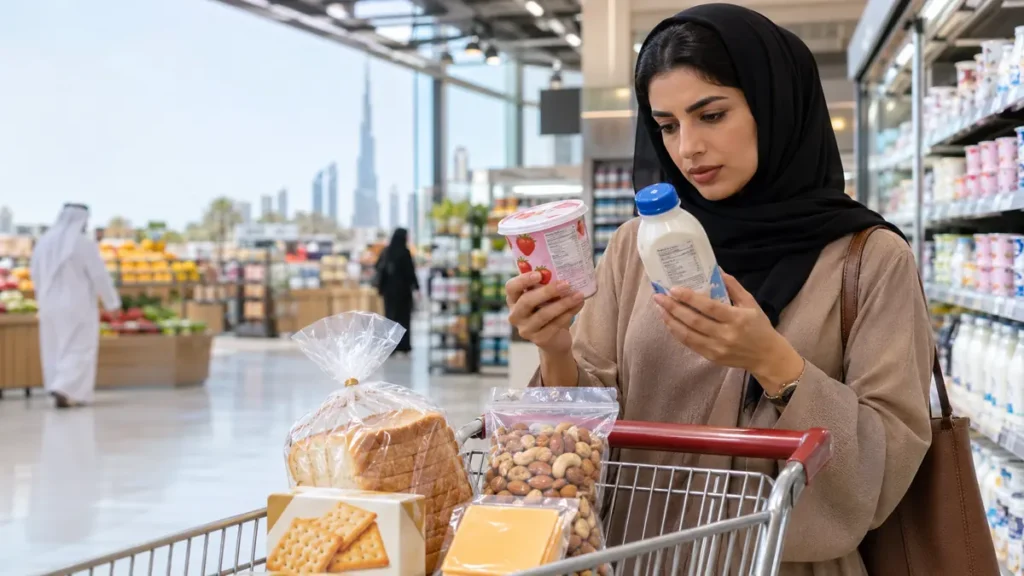
The UAE has begun implementing national limits for sodium, processed sugar and fat in selected packaged foods. The change is phased rather than an overnight removal of familiar products. Manufacturers, importers and other food establishments must bring covered products within specified limits over scheduled compliance periods extending to the end of 2030.
The official MoHAP announcement published by Emirates News Agency explains that the framework covers locally manufactured and imported packaged foods in the selected categories, including products handled in free zones. Its public-health purpose is to improve nutritional value and support more balanced choices.
Which foods are covered?
The named categories include leavened and flat bread, sweetened milk drinks and milk alternatives, sweetened or flavoured yoghurt and laban, several salty snack types, and processed cheese. A product being sold in the UAE does not automatically mean every nutrient in it is low; the new limits apply only to the targeted products and ingredients under the resolution.
| Product group | Targeted ingredient examples | Final-phase direction |
|---|---|---|
| Leavened and flat bread | Sodium, total sugars and total fat | Lower maximum limits by 31 December 2030 |
| Sweetened milk drinks and alternatives | Total sugars | Final maximum of 8g per 100g |
| Sweetened or flavoured yoghurt and laban | Total sugars | Final maximum of 10g per 100g |
| Salted crackers, nuts, seeds, pretzels and extruded snacks | Sodium | Category-specific reductions |
| Spreadable and other processed cheese | Sodium | Lower category-specific maximums |
The figures are maximums per 100 grams of the named product. Shoppers should not assume that the serving shown on a packet is 100 grams. Compare the same unit on two labels rather than comparing different serving sizes.
What shoppers may notice
Reformulated products may taste slightly less salty or sweet, particularly after later phases. Packaging or recipes may change, but the regulation does not require every brand to use the same formula. Manufacturers can adjust ingredients and production methods while meeting food-safety and labelling obligations.
- Check sodium and sugars per 100g, not only per serving
- Compare similar products within the same category
- Read the ingredient list as well as the nutrition panel
- Keep allergen warnings separate from nutrition comparisons
- Remember that “reduced” does not mean unlimited consumption
- Follow storage instructions after opening
Our Dubai grocery-shopping guide shows a practical trolley order, while the milk and yoghurt storage guide is useful for chilled products included in the new framework.
How the compliance phases work
The first group of products must meet first-phase maximums within nine months from the resolution’s effective date, then continue reducing to the final limits by 31 December 2030. The processed-cheese group has up to two years and three months for its first phase, followed by the same final deadline.
Older stock manufactured or imported before the resolution takes effect may remain on sale for up to one year from the effective date or until expiry, whichever comes first. This means shoppers may temporarily see old and reformulated versions together.
Where reaching the first limit would require reducing a targeted ingredient by more than 20 per cent, an eligible establishment may apply to MoHAP for a technical exception within the stated period. That process does not remove the final 2030 obligation.
Nutrition limits are not allergen rules
A lower-sugar yoghurt can still contain milk, and a lower-sodium snack can still contain nuts, wheat or sesame. Anyone managing an allergy must continue checking the complete label and cross-contact statement. See our Dubai food-allergy guide and festive sweets label guide for separate safety steps.
Storage and portion decisions still matter
Nutrient reformulation does not change refrigeration or food-hygiene needs. Chilled dairy and cheese must remain cold, and opened packages should follow their stated storage period. The Dubai refrigerator guide explains temperature control, while the picnic cooler guide covers transport outside the home.
Packaged snacks can also make portion sizes easy to underestimate. Place a reasonable amount in a bowl rather than eating directly from a large family pack. For prepared food ordered outside the home, use the separate Dubai takeaway safety guide.
Questions people often ask
Are all packaged foods covered by the UAE limits?
No. The resolution applies to selected categories, including specified breads, sweetened dairy drinks, flavoured yoghurt or laban, salty snacks and processed cheese.
Do the limits apply to imported products?
Yes, covered packaged foods may be locally manufactured or imported. Products intended only for direct export or onward export are treated differently unless traded inside the UAE.
When must final limits be met?
Covered establishments must continue phased reductions and meet the final maximum limits by 31 December 2030.
Will older products disappear immediately?
No. Qualifying stock made or imported before the effective date may remain on sale for up to one year or until expiry, whichever comes first.
Does lower sugar or salt mean the product is allergy-safe?
No. Nutrient limits and allergens are separate issues. Always read the ingredient list and allergen warning for milk, nuts, wheat, sesame and other relevant ingredients.


