
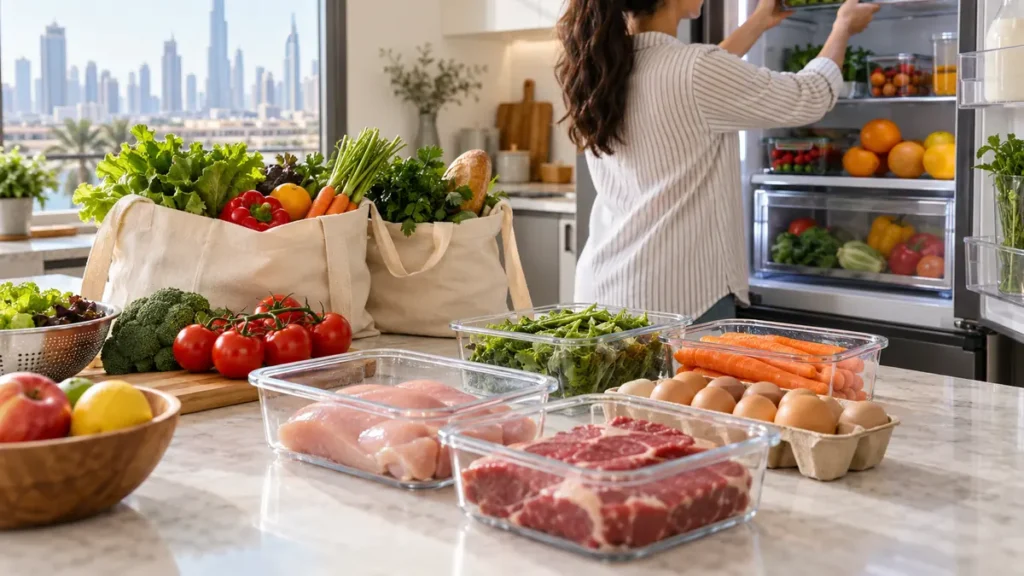
Food safety begins before groceries reach the refrigerator. The order in which you shop, the way items are separated in the trolley and the time spent travelling home can all affect quality and safety. Dubai’s warm climate makes planning especially important for chilled and frozen products, even when a supermarket is only a short drive away.
Dubai Municipality’s official consumer food-safety page publishes grocery-shopping and food-storage advice alongside guidance on allergies, dining out, handwashing and school food. Use the current authority material for detailed safety instructions and follow any storage label printed on the product.
A safer order for the shopping trip
| Stage | Safer action | Reason |
|---|---|---|
| Before leaving | Check fridge space and make a list | Reduces delay and unnecessary buying |
| Dry goods first | Choose cans, grains and household items | Keeps cold food out of refrigeration for less time |
| Fresh produce next | Inspect and bag delicate items | Prevents bruising and leakage |
| Chilled and frozen last | Collect dairy, meat, seafood and frozen food near checkout | Shortens time in the temperature danger zone |
| At home | Store cold food immediately | Restores temperature control quickly |
Inspect packaging before it enters the trolley
Do not buy a can that is swollen, leaking or severely dented around a seam. Check that jars are sealed, cartons are dry and frozen packs are solid rather than wet or misshapen. A damaged package can expose food to contamination or show that temperature control has failed.
Read the use-by or expiry information and select a pack size that can be finished safely. The UAE food date-label guide explains the difference between safety-related and quality-related dates. The Dubai food-label guide helps compare serving sizes, ingredients and allergen information.
Separate raw food from ready-to-eat food
Place raw meat, poultry and seafood in separate leak-resistant bags. Keep them below or away from bread, fruit, salads and foods that will not be cooked. The same separation should continue in the car and refrigerator. One leaking pack can contaminate several otherwise safe purchases.
At home, store raw items on a low shelf in a tray so liquid cannot drip. The Dubai raw-chicken safety guide covers handling poultry without spreading contamination. Seafood shoppers can use the Dubai seafood guide for freshness and cold-transport checks.
Protect the cold chain on the way home
Buy chilled and frozen products last, then go directly home. An insulated bag with cold packs is useful for a longer journey, a hot day or several stops. Do not leave groceries in a parked car while completing other errands; cabin temperatures can rise quickly.
Frozen food with large ice crystals, torn packaging or signs of thawing should be questioned before purchase. Once home, place refrigerator and freezer items away first. The Dubai refrigerator safety guide explains temperature checks and what to do after a power cut.
- Check storage space and write a list before leaving.
- Choose dry goods before chilled and frozen products.
- Inspect seals, cans, cartons and date labels.
- Bag raw meat, poultry and seafood separately.
- Use an insulated bag when the trip home may be delayed.
- Store cold food immediately on arrival.
- Label opened or repacked food with a useful date.
Store food by risk, not only by convenience
A crowded refrigerator can restrict cold-air circulation. Leave space around vents and avoid using the door for highly perishable foods because its temperature changes each time it opens. Store ready-to-eat foods above raw products, use clean covered containers and follow the manufacturer’s instructions after opening.
Pantry foods need a cool, dry place away from cleaning chemicals and direct sunlight. Rotate older products to the front instead of opening the newest pack first. For cooked meals and leftovers, use the Dubai cooked-food cooling guide so a large hot container is not left at room temperature for too long.
When a product looks unsafe
Do not taste food to decide whether it is safe. If a package is leaking, swollen, unexpectedly warm or has an unusual odour after opening, isolate it from other food and follow the retailer or authority’s current complaint and disposal advice. Keep the receipt, product name, batch details and photographs.
The Dubai consumer complaint guide explains how to organise evidence for an official follow-up. If an authority announces a recall, follow the exact product and batch information rather than discarding unrelated items.
Questions people often ask
Which groceries should I buy last in Dubai?
Choose chilled and frozen products near the end of the trip so they spend less time outside temperature control.
Should raw meat be bagged separately?
Yes. Use a separate leak-resistant bag and keep raw meat, poultry and seafood away from produce and ready-to-eat food.
Is it safe to leave groceries in a parked car?
No. A parked vehicle can heat rapidly. Go directly home after buying perishable food or use suitable cold transport for unavoidable delays.
Where should raw food go in the refrigerator?
Place it in a covered or leak-resistant tray on a low shelf so liquid cannot drip onto cooked or ready-to-eat food.
What should I do with a swollen or leaking package?
Do not buy or taste it. Keep evidence if already purchased and follow the retailer or Dubai Municipality’s current reporting advice.


