
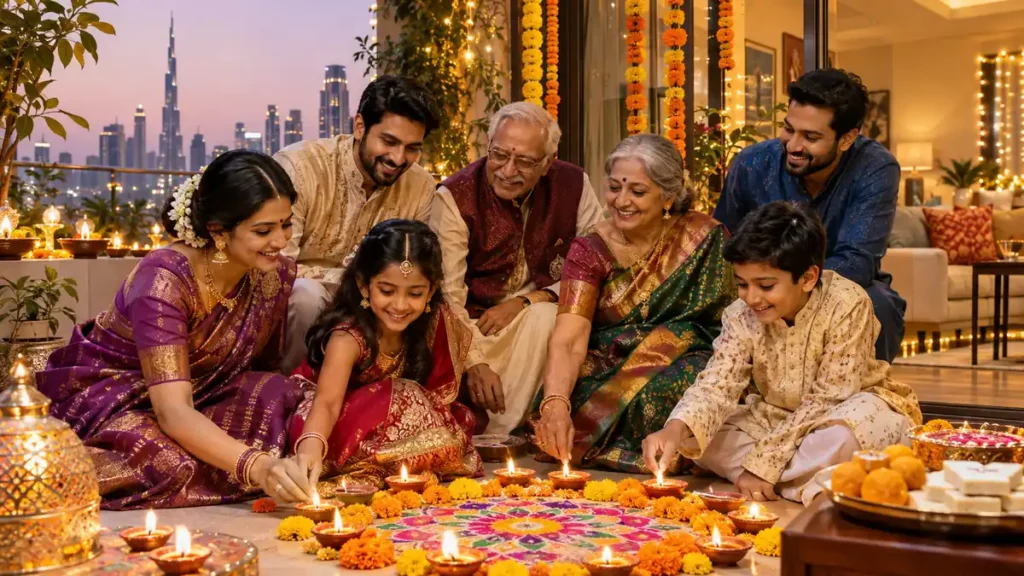
Diwali in Dubai is a warm, colourful celebration shaped by family gatherings, faith, food, shopping and the experience of celebrating Indian traditions away from home. Apartments glow with rows of diyas, doorways are decorated with rangoli, kitchens become busy with festive cooking, and families make time to visit relatives and friends.
Dubai’s large Indian community gives the festival a familiar sense of energy. At the same time, the city’s multicultural character makes Diwali accessible to people from many different backgrounds. Colleagues exchange sweets, neighbours admire decorations, schools organise cultural activities, and public destinations may host music, dance, workshops or officially approved light displays.
Dubai’s official Festival of Lights programme runs from 2 to 12 November 2026. The official Visit Dubai Festival of Lights page should be checked for the current citywide programme. Individual events may have separate dates, admission conditions and booking requirements.
What is Diwali?
Diwali, often called the Festival of Lights, is one of the most important festivals celebrated by Hindu communities. It generally symbolises the victory of light over darkness, knowledge over ignorance and hope over fear.
The meaning and customs are not identical in every family or region. Many Hindu traditions connect Diwali with Lord Rama’s return to Ayodhya after exile and the defeat of Ravana. Lakshmi, the goddess associated with prosperity and wellbeing, is worshipped in many homes. Some communities connect the festival with Lord Krishna’s victory over Narakasura, while Bengali households may observe Kali Puja.
Diwali also has significance for other religious communities. Jains associate it with the attainment of nirvana by Lord Mahavira. Many Sikhs observe Bandi Chhor Divas around the same period. These traditions are related but should not be treated as interchangeable.
That diversity is particularly visible in the UAE, where people from different Indian states and communities celebrate together while retaining their own food, prayers, clothing and family customs.
The five days associated with Diwali
The sequence and names can vary by family and regional tradition, but a commonly recognised five-day period includes:
| Day | Common name | Typical customs |
|---|---|---|
| Day one | Dhanteras | Cleaning, shopping, lamps and prayers for health and prosperity |
| Day two | Naraka Chaturdashi or Choti Diwali | Home preparation, bathing rituals and lighting lamps |
| Day three | Diwali or Lakshmi Puja | Prayers, diyas, family meals, sweets and new clothes |
| Day four | Govardhan Puja or regional New Year observances | Worship, festive food and community traditions |
| Day five | Bhai Dooj | Celebrating the relationship between brothers and sisters |
Not every household observes all five days in the same way. Some families focus mainly on Lakshmi Puja and the main Diwali evening, while others follow a longer calendar of ceremonies and visits.
What happens on Dhanteras?
Dhanteras begins the wider Diwali period for many Hindu families. Homes and workplaces are cleaned and organised, and small lamps may be placed near the entrance. The day is associated with prosperity, health and an auspicious beginning to the festive period.
Shopping is an important Dhanteras custom. Depending on the family, people may purchase:
- Gold or silver jewellery
- Silver coins
- New kitchen utensils
- Household items
- Traditional clothing
- Diyas and decorative lights
- Gifts for relatives or employees
- Items needed for prayer ceremonies
- Tools or equipment connected with work
Buying something new is traditionally considered auspicious, but Dhanteras does not require expensive shopping. A small steel utensil, silver coin or practical household item may carry greater personal meaning than an unaffordable purchase.
Dubai’s gold districts and jewellery shops become especially busy around this period. Buyers should compare prices, understand making charges and request a detailed invoice. Festive excitement should not replace normal financial caution.
How families prepare for Diwali in Dubai
Preparation often begins with a thorough cleaning of the home. Families organise cupboards, remove unused items and prepare space for visitors. The cleaning has practical value, but it can also represent making room for a positive new beginning.
Entrances may be decorated with colourful rangoli made from coloured powder, flowers or reusable materials. Torans, marigold garlands and strings of lights are placed around doors, balconies and living rooms. Families who use oil lamps should keep them on stable, heat-resistant surfaces and away from curtains, children and pets.
Traditional clothing is another important part of the celebration. Sarees, lehengas, salwar suits, kurtas and other regional styles are worn for prayers, meals and visits. Some people buy a new outfit, while others wear a favourite family garment or reuse clothing from earlier celebrations.
For current public activities, families can consult our Festival of Lights Dubai 2026 planning guide. It covers transport and programme checks without replacing the cultural traditions followed at home.
Puja, diyas and the meaning of light
For many Hindu households, Lakshmi Puja is the spiritual centre of the main Diwali evening. Family members clean the prayer space, prepare offerings and light diyas. Prayers may honour Lakshmi and Lord Ganesha, although the ceremony differs according to family tradition.
The lamps are more than decoration. They represent knowledge, hope and the removal of darkness. In Dubai apartments, many families combine traditional clay diyas with safer electric lights, particularly where building regulations or young children make open flames difficult.
Visitors should follow the household’s lead during a religious ceremony. Shoes may need to be removed, and photography may not be appropriate. A respectful guest does not need to understand every ritual but should avoid interrupting prayers or treating sacred objects as props.
Sweets, festive meals and sharing food
Food is central to Diwali hospitality. Popular sweets can include laddoo, barfi, jalebi, peda, kaju katli and regional homemade specialities. Savoury snacks, vegetarian dishes and family recipes are also prepared and shared.
In Dubai, a Diwali table may reflect several parts of India at once. Friends from different regions often exchange foods that would not traditionally appear together in one household. This is one of the most natural ways the UAE’s Indian community adapts the festival.
When buying or sharing sweets, retain ingredient information for guests with allergies. Milk, nuts, peanuts, wheat and sesame may be present, and cross-contact can occur in shared kitchens. Our Dubai festive sweets safety guide explains transport, refrigeration and serving precautions. Anyone hosting guests with allergies should also review the Dubai food-allergy ordering guide.
Gifts and visiting family and friends
Diwali gifts do not need to be elaborate. Sweets, dried fruit, candles, flowers, clothing, books and practical household items are common choices. Some workplaces distribute gift boxes or organise a shared meal.
A short personal message often makes a simple gift more meaningful. When giving food, include the ingredient label rather than removing the sweets from their original packaging.
Visiting family and friends may continue across several evenings because work schedules, school commitments and travel make it difficult for everyone to gather on one night. This flexibility is a normal part of celebrating Diwali in Dubai.
How Dubai celebrates Diwali
Beyond private homes, Dubai marks the season through cultural performances, decorations, workshops, dining, retail activity and officially announced public entertainment. Residents may find rangoli workshops, diya painting, Indian music, dance performances or family programmes at public destinations.
Choose one confirmed activity rather than trying to visit several crowded locations in one evening. Our Dubai Design Week visitor transport guide offers useful arrival-planning principles for large city events.
People travelling from another emirate should also plan the return journey and allow for evening traffic. The UAE road-trip planning guide covers vehicle, document and rest-stop checks.
Fireworks and community safety
Only attend fireworks or pyrotechnic displays that have been officially announced by the venue or relevant authority. Do not set off personal fireworks in a residential area, balcony, park or car park.
Open flames also require care. Keep diyas away from fabrics, do not leave them unattended and place them where children cannot knock them over. Use LED lamps when open flames are unsuitable.
Save the appropriate response numbers before hosting a large gathering using our UAE emergency numbers guide.
Celebrating Diwali respectfully as a visitor
Non-Hindu residents and tourists are usually welcome at public cultural activities and may be invited to private celebrations. A few respectful habits make participation more comfortable:
- Ask before photographing a prayer or another family
- Follow instructions about shoes and the prayer area
- Accept food politely, but mention allergies clearly
- Do not describe every Indian custom as identical
- Ask how the particular family observes the festival
- Dress neatly when attending a formal family gathering
- Avoid turning a religious ceremony into social-media content
Diwali in Dubai works because it is both deeply personal and openly shared. The most meaningful celebration may be a prayer at home, a meal with relatives, a box of sweets exchanged between neighbours or a child learning why a small lamp carries such powerful symbolism.
Questions people often ask
What is Diwali?
Diwali is the Festival of Lights, observed through prayers, lamps, family gatherings, food and other traditions. Its religious meaning and customs vary between communities and regions.
What is Dhanteras, and what do people buy?
Dhanteras begins the Diwali period for many families. People may buy gold, silver, utensils, clothing, household goods or another practical new item considered auspicious.
How is Diwali celebrated in Dubai?
Families decorate their homes, light diyas, perform puja, wear traditional clothing, exchange sweets and visit relatives. Dubai also hosts officially announced cultural activities and public entertainment.
Can people use personal fireworks during Diwali in Dubai?
Residents should not use personal fireworks in homes or community spaces. Attend only officially announced and properly managed public displays.
Can non-Hindus join Diwali celebrations?
Yes. Public programmes are generally open to different communities, and many families invite friends or colleagues. Visitors should follow the host’s guidance and respect religious ceremonies.


