
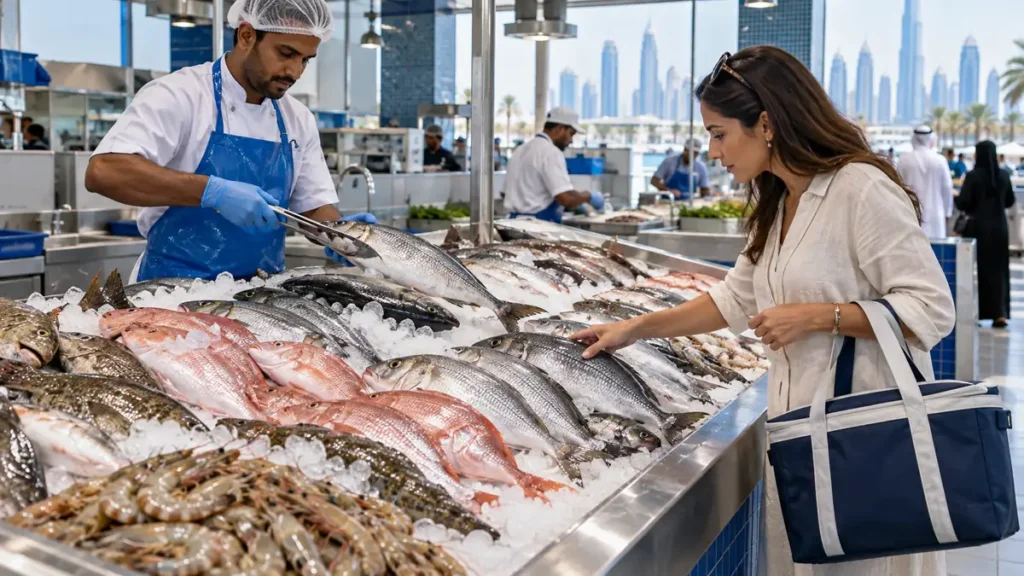
Buying seafood in Dubai should begin with a plan for the journey home. Fish can look appealing on ice yet lose quality quickly if it is left in a warm car, crushed under other shopping or stored too long. Dubai Municipality’s official consumer food-safety page provides shopping and storage guidance, while consumers remain responsible for keeping the cold chain intact after purchase.
This guide applies to fish markets, supermarkets and other licensed sellers. It does not recommend one shop or species. Availability, origin and price change daily, so the useful skills are inspecting the product, asking clear questions and buying only what can be chilled or cooked promptly.
Prepare before visiting the counter
Place seafood near the end of the shopping trip and carry an insulated bag with cold packs when the journey will take time. Decide whether the meal needs whole fish, fillets or frozen seafood. A pre-cut item saves preparation time, but it also gives the shopper fewer visible signs to inspect.
If the same trip includes fruit and vegetables, use the Dubai fresh-produce guide to pack delicate items separately. The UAE date-label guide is useful for frozen or packaged seafood.
| Seafood form | Freshness check | Transport priority |
|---|---|---|
| Whole fish | Clean smell, firm flesh, bright eyes and intact skin | Keep chilled and prevent crushing |
| Fillets | Moist but not slimy; no dry edges or strong odour | Use leak-resistant packaging |
| Shellfish | Buy from an approved cold display; reject damaged packaging | Keep very cold and follow seller instructions |
| Frozen seafood | Package intact, no major thawing or excessive ice damage | Take home last in an insulated bag |
| Cooked seafood | Protected display and clear storage guidance | Separate from raw purchases |
Use several freshness signs together
No single sign proves freshness. Whole fish should have firm flesh that springs back, skin that is not badly dried and an odour that is clean rather than sour or ammonia-like. Fillets should not be slimy or heavily discoloured. Ask when the item was prepared and how it should be stored.
For packaged products, read the ingredients, allergens, storage temperature and use instructions. The Dubai food-label guide explains how serving information differs from ingredients and storage directions.
Protect the cold journey
- Buy seafood at the end of the shopping trip.
- Use an insulated bag with adequate cold packs.
- Keep raw seafood separate from ready-to-eat food.
- Do not leave the purchase in a parked vehicle.
- Go directly home and refrigerate or freeze promptly.
- Keep the receipt and product label until the meal is finished.
- Wash hands and clean surfaces after handling raw seafood.
Store according to the meal plan
Place raw seafood in a clean, covered, leak-resistant container on a low refrigerator shelf so liquid cannot drip onto other food. If it will not be used within the safe period advised by the seller or label, freeze it while quality is still good rather than waiting until it smells questionable.
The Dubai freezer guide covers labelling and controlled defrosting. The cooked-food cooling guide explains why a large hot meal should be divided and chilled rather than left at room temperature.
Prevent cross-contamination
Use a separate board and utensils for raw seafood, wash hands with soap and clean food-contact surfaces. Do not return cooked fish to the plate that held the raw product. Marinade that touched raw seafood should not become a table sauce unless it is cooked appropriately.
The family meal-prep guide provides a broader clean-workflow checklist. If the product, display or seller creates a safety concern, record the item, location, date, receipt and photographs, then use the Dubai food-safety reporting guide.
Discard when the evidence is wrong
Cooking cannot make every spoiled product safe. Discard seafood with a strong sour or ammonia odour, widespread slime, unexplained colour change, damaged packaging or uncertain temperature history. Do not taste a questionable item to decide.
Good seafood shopping is not about finding the largest display. It is a short cold-chain project: inspect carefully, pack separately, travel directly home and choose refrigeration or freezing immediately.
Questions people often ask
What should fresh fish smell like?
It should have a mild, clean smell. A strong sour or ammonia-like odour is a reason not to buy or eat it.
Should seafood be bought at the start of a shopping trip?
No. Buy it near the end so it spends less time away from controlled refrigeration.
Can I leave seafood in a parked car?
No. Heat can rapidly damage the cold chain, even when the air-conditioned journey itself is short.
Where should raw seafood sit in the refrigerator?
Keep it covered in a leak-resistant container on a low shelf, separate from ready-to-eat foods.
What details help when reporting a food-safety concern?
Keep the seller’s location, product description, date, receipt, label or batch information and clear photographs where available.


