
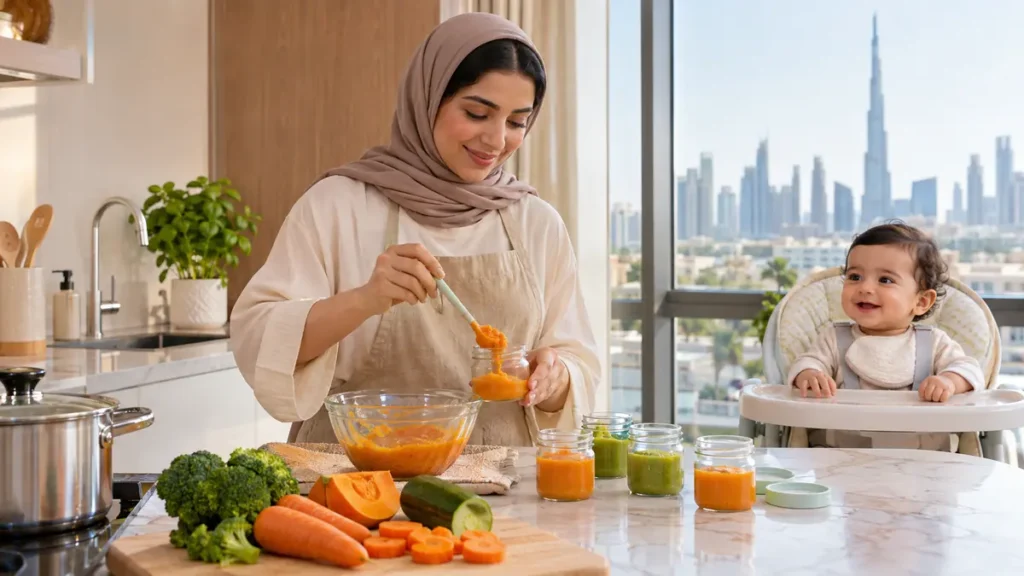
Food prepared for a baby needs more careful handling than an ordinary family meal because small children are more vulnerable to foodborne illness and may be trying ingredients for the first time. A safe routine is built around clean hands, separate utensils, suitable textures, small portions and clear storage labels.
Dubai Municipality’s official consumer food-safety portal brings together household guidance on food safety, grocery storage, allergies and handwashing. Parents should also follow their paediatrician’s advice on when to introduce foods, appropriate textures, allergies and any medical or developmental needs.
Separate safety from nutrition advice
| Stage | Food-safety action | Why it matters |
|---|---|---|
| Shopping | Choose intact, in-date ingredients | Reduces risk before preparation |
| Preparation | Wash hands and clean food-contact surfaces | Limits cross-contamination |
| Cooking | Cook ingredients fully where required | Reduces harmful organisms |
| Portioning | Use clean small containers | Avoids repeated warming of a large batch |
| Serving | Use a clean spoon and discard contaminated leftovers | Saliva can introduce bacteria |
For general grocery habits, use the Dubai grocery and storage guide. The fresh produce washing guide explains why clean running water and clean preparation surfaces matter.
Prepare a clean workstation
Wash hands before starting and again after touching raw meat, eggs, waste, phones or pets. Clean the counter, blender parts, knife, chopping board and storage containers. Keep raw animal foods separate from ready-to-eat fruit, vegetables and cooked food. Use potable water and follow the ingredient’s cooking directions.
- Check expiry dates and packaging before use
- Wash hands and clean all food-contact equipment
- Keep raw and ready-to-eat ingredients separate
- Prepare a texture suitable for the child’s stage
- Portion food into clean, shallow containers
- Label each portion with contents and preparation date
- Ask a clinician about allergies or feeding difficulties
The Dubai food thermometer guide covers cooking and reheating checks. Egg dishes need the same careful separation, cooking and storage habits.
Cool and store small portions promptly
Do not leave a large hot batch on the counter for a long period. Divide it into shallow containers so it cools more efficiently, then refrigerate or freeze it according to trustworthy guidance for that recipe and ingredient. Keep a reliable refrigerator temperature and avoid overfilling shelves so cold air can circulate.
Our Dubai refrigerator safety guide explains appliance checks. If the power fails or the temperature history becomes uncertain, use the power-cut food safety guide rather than guessing.
Serve without contaminating the batch
Transfer only the amount likely to be eaten into a separate bowl. Do not dip a used feeding spoon back into the stored container, and do not save food left in the baby’s bowl for another meal. Check the temperature before serving, especially after microwave reheating, because hot spots can remain even when the surface feels cool.
When reheating, use a container labelled for the appliance, vent it as directed, stir thoroughly and allow standing time. The microwave container guide covers lids, materials and steam-burn prevention.
Carry baby food in Dubai’s heat
For a short outing, take only the portions needed and keep perishable food properly chilled in an insulated bag with sufficient cold packs. Limit how often the bag is opened and keep it out of a parked vehicle. Bring clean feeding utensils, wipes for surfaces and a bag for used items.
The Dubai picnic cooler guide helps with cold-chain planning. Air travellers should check airline and airport security arrangements for baby food rather than assuming normal liquid rules apply.
Allergies and new ingredients
Introduce foods according to professional guidance and keep a clear ingredient record. When using packaged baby food, read the complete label every time because recipes can change. If the child has breathing difficulty, facial swelling, severe vomiting, unusual drowsiness or another concerning reaction, seek urgent medical help.
This guide covers household food handling, not individual medical nutrition. Premature babies, children with allergies and children with swallowing, growth or immune concerns need advice from a qualified clinician who knows their history.
Questions people often ask
Can I save food left in a baby’s bowl?
It is safer to discard it because the used spoon and saliva can contaminate the remaining food.
Should homemade baby food be stored as one large batch?
Small labelled portions are easier to cool, thaw and serve without repeatedly warming the full batch.
Can I microwave baby food?
Use a suitable container, stir thoroughly, allow standing time and check for hot spots before serving.
How should I carry baby food outdoors in Dubai?
Keep perishable portions chilled in an insulated bag with cold packs and away from heat.
Where should parents get allergy and texture advice?
Ask a qualified paediatrician or dietitian who can consider the child’s age, development and health history.


