
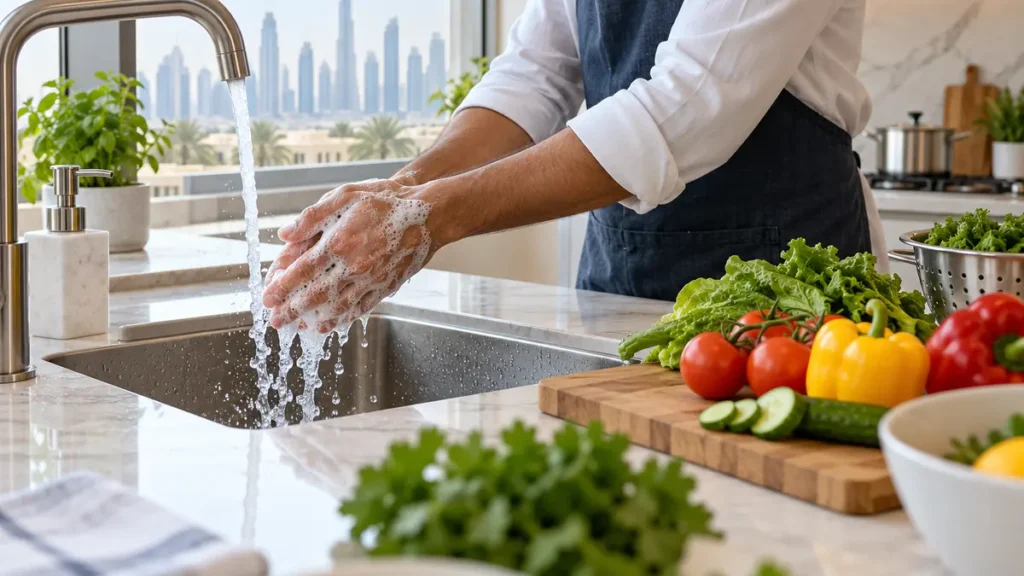
Clean hands are one of the simplest barriers between everyday germs and ready-to-eat food. In a home kitchen, the critical issue is not washing once before cooking; it is washing again whenever hands move from a contaminated task to a clean one. Raw meat, bins, phones, pets, deliveries and bathroom visits can all interrupt safe preparation.
Dubai Municipality includes food-safety and handwashing advice on its official consumer page. Use the authority guidance alongside product labels and medical advice, particularly when preparing food for children, pregnant people, older adults or anyone with reduced immunity.
When hands need washing
| Moment | Action | Reason |
|---|---|---|
| Before cooking | Wash and dry hands | Starts with a clean preparation step |
| After raw meat or eggs | Wash before touching other food | Prevents cross-contamination |
| After phone, bin or pet contact | Wash again | These surfaces can carry contamination |
| After coughing or touching face | Pause and wash | Protects ready-to-eat food |
| Before serving or eating | Wash and use clean utensils | Avoids recontaminating finished food |
Wash before starting, after using the toilet, after changing a nappy, after handling raw meat, poultry, seafood or eggs, and after touching rubbish. Wash after coughing, sneezing, eating, smoking, touching the face or using a phone during preparation.
The raw chicken safety guide explains why poultry handling is a high-risk transition. The grocery shopping and storage guide covers separation before food reaches the kitchen.
How to wash effectively
Wet hands with clean running water, apply soap and rub every surface: palms, backs, between fingers, thumbs, fingertips and around nails. Continue for long enough to clean thoroughly, rinse under running water and dry with a clean single-use towel or a clean personal towel that is changed frequently.
A wet reusable kitchen cloth can spread contamination, so do not use the same cloth for hands, counters and dishes. The Dubai food-allergy guide explains why clean hands and clear ingredient separation also matter for allergens.
- Remove rings that trap food during preparation.
- Use running water and ordinary soap.
- Rub palms, backs, thumbs, fingertips and between fingers.
- Rinse completely and dry with a clean method.
- Wash again after every contaminated task.
- Keep hand towels separate from dish cloths.
- Cover cuts with a waterproof dressing.
Gloves and sanitizer are not automatic substitutes
Disposable gloves can become contaminated exactly like hands. Wash before putting them on, change them between tasks and never wash disposable gloves for reuse. Hand sanitizer can help when soap and water are unavailable, but visibly dirty or greasy hands need proper washing.
Do not wash raw chicken in the sink; splashes can spread microbes to taps and counters. Instead, cook food to a safe internal temperature and use the food thermometer guide for a measurement-based check.
Set up the kitchen to make washing easy
Keep soap and a clean drying method available at the handwashing sink. Move phones away from the preparation zone or clean them before and after use. Organise ingredients first so you do not repeatedly open cupboards with contaminated hands.
Store food promptly after preparation. The refrigerator food-safety guide covers cold storage, and the cooked-food cooling guide explains how to handle leftovers.
When illness changes the plan
A person with vomiting, diarrhoea, fever or a contagious illness should avoid preparing food for others. Cleaning hands does not remove every risk when someone is actively ill. If food appears unsafe, do not taste it to test it; isolate it and follow the relevant authority or retailer advice.
For a product or service problem, the Dubai consumer complaint guide shows how to retain receipts, batch details and photographs.
Questions people often ask
When should I wash my hands while cooking?
Wash before starting and again after raw food, rubbish, phones, pets, bathroom use, coughing, touching your face or any other contaminating task.
Can hand sanitizer replace soap and water?
Not when hands are visibly dirty or greasy. Soap and running water are the better kitchen method for physical cleaning.
Do gloves remove the need to wash?
No. Wash before putting gloves on and change them between tasks. Contaminated gloves can spread germs like bare hands.
Should I wash raw chicken?
No. Washing can spread contaminated droplets around the sink. Handle carefully and cook to a safe internal temperature.
What is the safest way to dry hands?
Use a clean single-use towel or a clean personal towel that is changed frequently, not a damp multipurpose kitchen cloth.


