
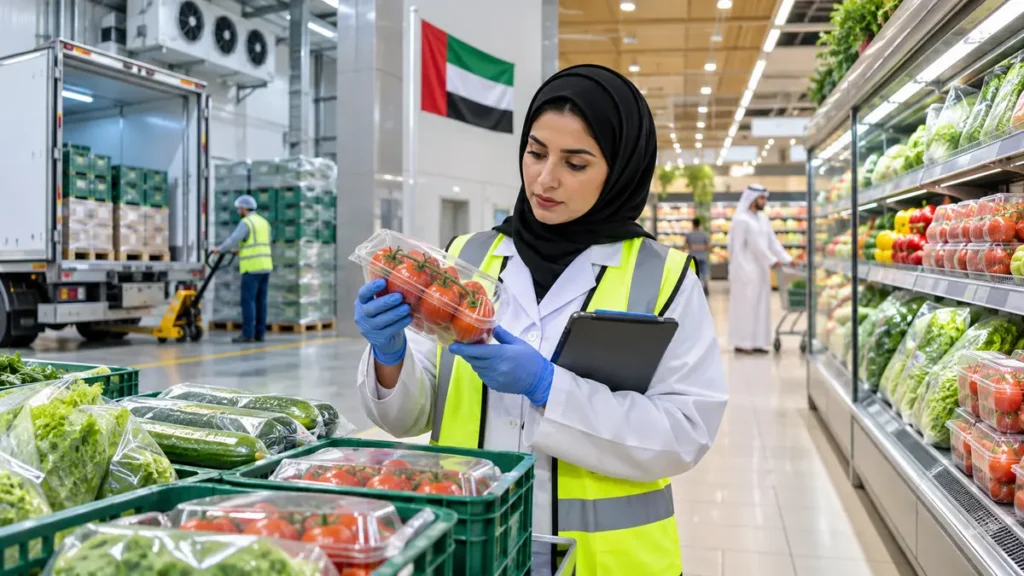
Food safety in the UAE is a chain of controls rather than a single inspection at a supermarket door. Imported products, local production, transport, storage, retail handling and official alerts all contribute to whether food reaches a shopper in suitable condition. Consumers do not need to audit the entire chain, but understanding it helps them recognise useful labels, protect chilled purchases and report a concern with evidence.
An official Ministry of Climate Change and Environment food-safety report describes ZAD registration, inspection and sample testing of imported foods, document checks at borders and rapid-alert coordination. Individual emirates carry out inspections and respond to local complaints while federal systems support coordination and product information.
Food safety across the supply chain
| Stage | Main control | What a consumer can check |
|---|---|---|
| Import or production | Product approval and legal requirements | Recognisable product and intact packaging |
| Transport | Temperature and hygiene controls | Chilled or frozen food is properly cold |
| Warehouse | Storage, traceability and stock rotation | No damage, leaks or pest signs |
| Retail display | Temperature, cleanliness and date control | Label, seal and display condition |
| Home journey | Consumer handling and refrigeration | Short transport time and safe storage |
The UAE food date-label guide explains expiry and best-before information. For chilled shopping, the Dubai grocery and storage guide provides a practical order for buying and transporting food.
Registration and traceability answer different questions
Product registration helps authorities identify food placed on the market and evaluate required information. Traceability connects a product or batch with its supplier and movement. Neither means a shopper can ignore damaged packaging, incorrect storage or an active recall. A useful label should allow the product and batch to be identified if a complaint arises.
- Read the product name and storage instruction
- Check the date and package seal
- Avoid swollen, leaking or badly damaged packs
- Choose chilled and frozen items near the end
- Use an insulated bag for a long journey
- Keep the receipt and batch details if concerned
- Follow official recall or disposal instructions
The Dubai refrigerator guide covers safe storage at home. The food-temperature guide explains cooking, cooling and reheating after the product leaves the shop.
Cold-chain protection continues after payment
A correctly displayed product can warm during a long car journey. Buy chilled and frozen items last, separate raw animal products from ready-to-eat food and go home promptly. Do not rely on air-conditioning alone to keep a boot or parked car cold. Refrigerate perishable food as soon as possible and follow the package instruction.
For an outdoor meal, the Dubai picnic cooler guide explains ice packs and serving time. Households with allergy concerns can use the Dubai allergen guide to reduce cross-contact.
Make a report that can be investigated
Record the shop or restaurant branch, date, time, product name, batch, use-by date, storage condition and the exact problem. Keep the receipt and original photographs. If illness is serious, seek medical help. Do not taste suspicious food to confirm a problem, and do not publish personal accusations while the authority is assessing evidence.
The Dubai AI food-safety guide explains how structured information can support risk analysis without replacing an official investigation.
Questions people often ask
Who is responsible for food safety in the UAE?
Federal laws and systems support national controls, while competent local authorities inspect establishments and handle matters within each emirate.
What is the ZAD system?
ZAD is the national food accreditation and registration system described by the UAE Government for food products placed on the market.
Does product registration guarantee perfect storage in every shop?
No. Registration is one control; transport, temperature, hygiene, retail handling and consumer storage still matter.
What details help with a food complaint?
Provide the product, batch, date, branch, receipt, storage condition, photographs and a factual description of the concern.
How should shoppers protect frozen food?
Buy it near the end, use an insulated bag when needed, travel home promptly and store it according to the label.


